
Reviewed · TOURS IN UPPSALA
Guided tour 90min at Old Uppsala mounds and old Uppsala church
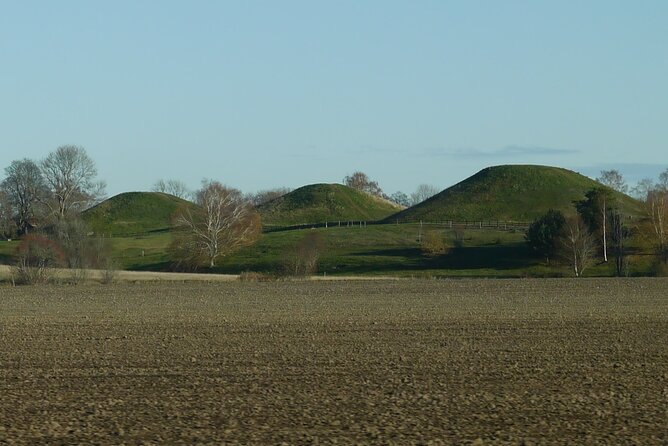
Old Uppsala’s great burial mounds are more than grassy hills beside a church. They mark the center of an early Scandinavian power base, where royal burials, long halls, craft workshops, and imported stones point to a society tied to far-off places. This 90-minute walk puts those pieces together with a local guide.
I like the focus on the Vendel Period, a less familiar chapter that came before the better-known Viking Age. I also like the chance to connect the open-air mounds with the church and the archaeological remains below it. The main catch is that the church visit depends on whether it is open, and one past tour fell short by staying mostly in one spot instead of walking around the site.
Key points to know before booking
- The tour begins at 5:30 pm: You meet at Disavägen 13 and finish back at the same place after about 90 minutes.
- The story starts before the Vikings: The guide focuses on the Vendel Period, roughly the centuries when large halls and elite workshops shaped Old Uppsala.
- The royal mounds are best understood with context: The guide explains burial customs, nearby farms, excavation dates, and what the finds reveal about daily life.
- The church visit is conditional: If Old Uppsala Church is open, you may see medieval statues, fifteenth-century frescoes, and a twelfth-century sacrificial log.
- The group is kept small: A maximum of 15 people should make it easier to hear questions and follow the guide around the site.
- Two bookings are required: If the minimum is not met, the experience may be moved to another date or canceled with a full refund.
Why Old Uppsala matters
Old Uppsala was not simply an old settlement with a few impressive mounds. It was a place of power, ceremony, farming, trade, and skilled work. The three large burial mounds, known as Gamla Uppsala kungshögar, are the most visible reminder of that role.
You will walk through an area shaped by several periods, especially the Vendel Period and the Viking Age. The guide uses the mounds, church, raised plateaus, and excavation areas as clues. Instead of treating each place as an isolated monument, the tour explains how the pieces fit together.
That approach is useful because the site can look quiet and simple at first. Grass-covered mounds do not announce who was buried inside them or why the location mattered. Without explanation, you may walk past the longhouse plateaus without realizing that large halls once occupied them.
The tour also looks at the people who lived and worked around the ceremonial center. You hear about nearby farms, the function of the settlement, the dates of important finds, and how people lived during this period. That makes the visit more than a stroll around burial hills.
Other guided tours around Sweden:
- Stockholm: City Archipelago Sightseeing Cruise with Guide
★ 4.3 · 10,798 reviews - Stockholm Archipelago Cruise with Guide
★ 4.0 · 1,125 reviews - Gothenburg: Archipelago cruise with guide
★ 4.3 · 1,002 reviews
Walking the royal mounds in about 50 minutes
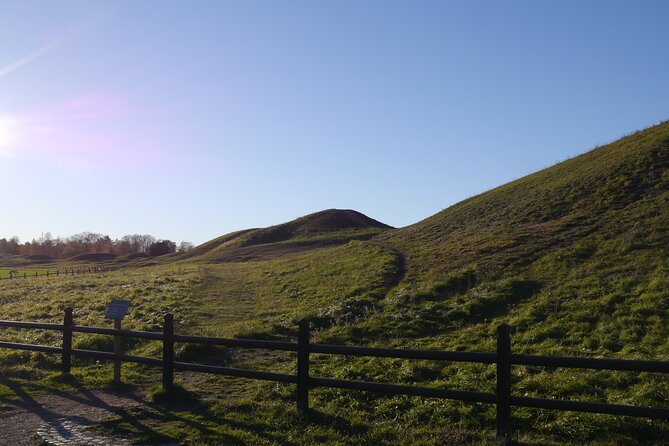
The first part lasts about 50 minutes and centers on the Old Uppsala mounds. Expect a guided walk through the burial ground, with the main focus on the large royal mounds and the discoveries made in and around them.
The guide discusses excavation work from recent years as well as earlier finds. This matters because archaeology at Old Uppsala continues to change the picture. New evidence can alter ideas about the size of the settlement, the work carried out there, and the people who controlled it.
You will hear about burial practices and the status suggested by the mounds. The guide also places the burials in the wider setting of farms and halls. That connection helps explain how a ceremonial center depended on food production, labor, craft workers, and organized authority.
I would pay close attention to the dates. The tour does not treat Vendel and Viking as one long, blurred period. The guide distinguishes between them and explains how the site developed over time. That is especially helpful if your knowledge of Swedish prehistory begins and ends with Vikings and runestones.
The walk requires a moderate level of physical fitness. The supplied details do not describe steep climbs or difficult terrain, but you should expect to move around an outdoor archaeological site for much of the experience. Wear sensible walking shoes, particularly if the ground is uneven or damp.
A strong guide should keep the group moving from mound to mound and use physical locations to explain the story. That point matters here. One reported experience became mostly a stationary talk, with no proper walk around the mounds. The provider acknowledged the problem and said the expected tour should include movement around the site and discussion of different objects.
That makes the individual guide important. Jonathan Olsson is specifically praised for his command of the Vendel and Viking periods, and his hosting is associated with a lively, detailed explanation of the site. He may not be the guide on every departure, so you should treat his name as a useful reference rather than a guarantee.
The longhouse plateaus and unusual imported stones
Near the church are raised areas where large halls once stood between the sixth and ninth centuries. These were not modest homes. They were long halls linked to the power center at Old Uppsala, and the archaeological evidence points to formal gatherings, elite activity, and specialist production.
The guide explains what these plateaus represent and why they are easy to miss. Today, you see open ground and gentle rises. In the past, the area held large buildings where people gathered, worked, and displayed status.
Some of the most striking finds came from exclusive workshops in this area. Archaeologists found evidence involving gold, silver, precious stones, and garnets from Sri Lanka. That last detail gives the site a wider reach than its rural setting might suggest.
You should not expect to handle or closely inspect these objects during the walk. The value lies in understanding what they imply. Imported garnets indicate long-distance connections and the movement of valuable materials across great distances. Gold and silver work points to skilled craftspeople and patrons with the means to support them.
This is one of the best reasons to choose the guided option instead of walking around Old Uppsala alone. A sign can identify a mound or plateau, but a guide can explain why a stone from Sri Lanka changes your understanding of the place. The physical remains are modest; the historical implications are much larger.
Old Uppsala Church and the remains beneath it
The second part lasts about 40 minutes and turns to Gamla Uppsala Kyrka, or Old Uppsala Church. The church visit is dependent on opening hours, so you should not book this experience assuming the interior is certain.
If the church is open, you may see medieval statues, frescoes from the fifteenth century, and a twelfth-century sacrificial log. These details show how the site changed from a pre-Christian ceremonial center to an important Christian religious place.
The church also has an important ecclesiastical past. It was an early cathedral in Sweden, excluding Danish Lund, and one of Sweden’s earliest bishop’s seats after Sigtuna, dating to the 1130s. The guide explains the finds beneath the old cathedral and the building’s place in the history of Uppsala.
That layering is the church’s appeal. You are not looking at a medieval building in isolation. Beneath and around it are signs of an earlier center, including the plateaus of the great halls. The tour links those periods without pretending they were all part of the same culture.
Still, the church section has a practical limitation. If the building is closed, you will hear about its history from outside, but you will not see the statues, frescoes, or sacrificial log. One past participant found that the church was closed and the mounds were not properly covered on that departure. I would confirm the expected church access close to the tour date if the interior is a major reason for booking.
Same city, a completely different afternoon:
- Stockholm: Skansen Open-Air Museum Admission Ticket
★ 4.5 · 3,427 reviews - Stockholm: Archipelago Boat Tour
★ 4.4 · 3,110 reviews - Stockholm: Highlights Boat Tour
★ 4.3 · 2,542 reviews - Stockholm Pass: Save up to 50% – Includes Vasa Museum Ticket
★ 4.1 · 2,392 reviews
What the 5:30 pm start means
The late-afternoon start gives the tour a clear place in a day around Uppsala. You can visit other parts of the city first, then meet at Disavägen 13 at 5:30 pm for the Old Uppsala walk.
The experience lasts about an hour and a half and ends back at the meeting point. That return to the starting location makes planning easier, especially if you are using public transport or arranging your own onward plans.
The tour is near public transportation, although the supplied information does not specify the exact bus or train connection. You receive confirmation when booking, so check the meeting instructions rather than relying on a general map pin.
A mobile ticket is included. All fees and taxes are covered, but gratuities are not. Service animals are allowed. The group can include up to 15 people, which is small enough for questions but not necessarily a private tour.
The tour needs at least two people to operate. If that minimum is not met, you are offered another date or experience, or a full refund. You can cancel for a full refund up to 24 hours before the start time. Changes or cancellations made inside that window are not accepted.
Is $106.73 a fair price?
At $106.73 per person, this is not a cheap way to spend 90 minutes. The value depends heavily on what you want from Old Uppsala.
You are paying for a specialist-led explanation of a site where much of the evidence is subtle. The mounds are free to walk around, and the church portion may also be viewed without a separate admission charge when open. If you are happy to read signs, visit independently, and build the story yourself, the price may feel high.
I see the cost differently if you care about archaeology and early Swedish history. The guide brings together the burial mounds, longhouse plateaus, farms, workshops, imported garnets, and church remains. Those links are hard to grasp from the visible ruins alone.
The price also makes more sense for a small group than for a large coach outing. With a maximum of 15 people, you should have a better chance to hear the explanation and ask about specific finds or excavation areas. Still, the value depends on the guide doing the full walk. A stationary lecture would not justify the same price as a careful tour of the site.
If the church is closed, part of the planned experience is missing. You still receive the outdoor history discussion, but you should weigh that possibility before booking. The tour is strongest for someone who values interpretation more than admission access.
Who will get the most from this walk?
I would choose this tour if you want to understand the period before and around the Viking Age, especially the Vendel Period. It suits anyone who enjoys archaeology, burial customs, early political centers, medieval church history, and the evidence behind historical claims.
It is also a good choice if you are visiting Uppsala from Stockholm and want a focused way to see a different side of the city. One complete day around Uppsala can include the university, cathedral, museum, and Old Uppsala, though this activity itself only covers the mound and church area.
You should be comfortable walking outdoors and standing while listening. The operator asks for moderate physical fitness, and the tour does not present itself as a seated museum talk.
I would be more cautious if you mainly want to enter the church or see original objects. Church access is not guaranteed, and the tour description does not promise a museum visit or display of the gold, silver, and garnets. The emphasis is on the site and the guide’s explanation.
My advice before you book
Check the church opening situation if the interior matters to you. Also look carefully at the meeting point, Disavägen 13, and allow enough time to arrive for the 5:30 pm start.
If Jonathan Olsson is leading your departure, you can expect a guide with a strong focus on Vendel and Viking-era subjects. If another guide is assigned, make sure the tour will include a proper walk around the mounds and longhouse plateaus, not only a talk from one location.
For the best experience, arrive ready to ask questions. Ask about the dates of specific finds, how the burial mounds relate to the surrounding farms, and what the Sri Lankan garnets reveal about trade and status. Those details are where the tour earns its price.
Should you book the Old Uppsala tour?
Book it if you want a guided explanation of one of Sweden’s most important early power centers and you value context more than a long list of sights. The strongest parts are the clear focus on the Vendel Period, the royal mounds, the longhouse sites, and the unusual imported materials.
Think twice if you need guaranteed church entry or expect a museum-style presentation with many objects on display. The outdoor walk should be the main reason you book, with the church as a valuable bonus when open.
At $106.73, this is a specialist experience rather than a casual sightseeing stop. For history-minded visitors, a good guide can turn quiet grassy mounds into a readable record of power, craft, belief, and long-distance contact. Just confirm the practical details and make sure the tour format suits you.
FAQ
Where does the Old Uppsala tour begin?
The tour begins at Disavägen 13, 754 40 Uppsala, Sweden.
What time does the tour start?
The tour starts at 5:30 pm.
How long does the experience last?
The guided experience lasts approximately 90 minutes. About 50 minutes are devoted to the mounds, followed by about 40 minutes at Old Uppsala Church.
Is entry to Old Uppsala Church guaranteed?
No. The church visit takes place if the building is open. If it is open, you may see medieval statues, fifteenth-century frescoes, and a twelfth-century sacrificial log.
What does the tour cost?
The listed price is $106.73 per person. All fees and taxes are included, but gratuities are not included.
How many people can join the tour?
The experience has a maximum group size of 15 people. At least two people must book for the tour to run.
Can I cancel for a refund?
Yes. You can cancel at least 24 hours before the start time for a full refund. Cancellations and changes made less than 24 hours before the start time are not accepted.
Just added around Sweden
- World War II Stockholm Old Town Walking Tour and Army Museum★ 4.6 · 4 reviews
- Vaxholm & Stockholm Archipelago: Guided Excursion, Day Trip★ 4.8 · 41 reviews
- Wilderness Tour with Snowmobile & Ice Fishing★ 4.9 · 28 reviews
- West Sweden: Sea Kayak Delight in Nature Reserves★ 5.0 · 6 reviews
- Self-Guided Audio Walking Tour Through Kurt Wallander’s Ystad★ 3.5 · 12 reviews
- Stockholm: Archipelago Guided Boat & Walking Tour of Vaxholm★ 3.1 · 23 reviews
- Uppsala bloody history 1h- racial biology, 18th century plague, 19th century prostitution etc.★ 5.0 · 4 reviews
- Uppsala’s biggest attractions – 1h city walk in Uppsala city.★ 4.5 · 3 reviews
Tours in Uppsala, compared.
Stockholm Viking History Full Day Tour to Sigtuna + Uppsala
Read our review →
Best of Uppsala: Private Walking Tour with a Local
Read our review →
Uppsala bloody history 1h- racial biology, 18th century plague, 19th century prostitution etc.
Read our review →
Uppsala Must See 2h city walk – 2h tour of all big attractions!
Read our review →
Browse the lists this tour appears in