
Reviewed · HISTORICAL TOURS
Uppsala bloody history 1h- racial biology, 18th century plague, 19th century prostitution etc.
Uppsala’s story is not all cathedral towers, university traditions, and peaceful Swedish streets. This one-hour walk brings you to the city’s gallows hill, plague years, brothels, and racial biology institute, then asks how respectable institutions treated poor, sick, dissenting, and supposedly defective people. It is a serious tour, but not a joyless one.
I like the way the route connects physical places with hard subjects, especially the walk through the old red-light district and the stop near Gustavianum. I also like that the tour does not stop at medieval violence, but carries the story into the 20th century with forced sterilization and racial science.
The main drawback is its subject matter. You should expect disturbing history, not a light sightseeing stroll, and the Gustavianum admission is not included. The meeting-point information also needs care, since the booking details name Riddartorget as the start while the route description mentions an introduction outside the City Library.
Key points to know before booking
- A one-hour walk through uncomfortable history: The tour covers plague, poverty, prostitution, persecution, slave trade, racial biology, anatomy, and sterilization.
- The route reaches beyond the usual sights: You visit streets linked to 19th-century brothels and poor neighborhoods, rather than seeing Uppsala only through its grand buildings.
- Gustavianum adds the scientific history: The discussion includes phrenology, the anatomical department, and rules about which convicted people could end up under the knife.
- The group is limited to 20 people: That is a useful size for questions and discussion.
- The price is $36.58 per person: Fees and taxes are included, while gratuities are not.
- The tone is serious but not without lighter moments: The guide balances grim subjects with brighter parts of Uppsala’s long story.
Why Uppsala’s darker past makes a strong walking tour
I find this kind of city walk useful because it changes how you read familiar streets. A cathedral, university museum, or quiet lane can look harmless until you learn who was excluded, punished, studied, or forgotten there.
The route brings together several periods instead of treating history as a tidy parade of kings and scholars. You move from the 17th-century slave trade to the 18th-century plague, 19th-century poverty and prostitution, and 20th-century racial biology and sterilization.
That range is the tour’s main strength. You get a picture of institutions that often presented themselves as moral, scientific, or respectable, while also hearing about the people who suffered under them.
The walk is listed at about one hour, so the guide must keep a firm pace. That makes it easy to fit into an afternoon in Uppsala, but it also means you should not expect a long lecture at every site. The experience works best as a focused introduction to subjects you may want to explore further.
More of the past around Sweden:
- Stockholm: Ghost Walk and Historical Tour
★ 4.7 · 2,206 reviews - The Original Stockholm Ghost Walk and Historical Tour – Gamla Stan
★ 4.5 · 1,165 reviews - Stockholm: Old Town Historical Walking Tour
★ 4.9 · 344 reviews
Svartbäcksgatan and the poor side of Uppsala
The route includes Svartbäcksgatan, described as a place to learn about poor Uppsala and the plague. This is an important early stop because it shifts your attention away from the city’s celebrated university and church life.
The plague years of 1709 to 1712 form one of the tour’s clearest historical anchors. A plague story can easily become a list of dates and death counts, but a good city walk gives the event a physical setting. Here, the streets help you think about how disease affected ordinary residents and exposed the sharp divide between those with protection and those without it.
The route information also places the plague discussion around St. Erik’s Square. Since the supplied details mention both Svartbäcksgatan and St. Erik’s Square for this part of the tour, you should expect the guide to connect several nearby locations rather than remain at one fixed point.
This portion may be especially useful if you have already seen Uppsala’s major monuments. It gives the city a social history, not just an architectural one.
Linnéträdgården and Uppsala’s former red-light district
The walk continues along streets outside Linnéträdgården, where Uppsala’s 19th-century red-light district once operated. The subject includes brothels, alcohol problems, and poor neighborhoods.
This is one of the most unusual parts of the route. Many city tours mention famous residents and beautiful buildings. Fewer point out where commercial sex and drinking shaped daily life for people living on the margins.
The value here is not shock for its own sake. The red-light district helps explain how poverty, public morality, alcohol, and policing overlapped in 19th-century cities. You get a chance to look at ordinary streets and consider the people who used them under very different conditions.
The guide also connects prostitution with the wider story of poor Uppsala. That matters because the district was not an isolated curiosity. It belonged to a city where class shaped housing, work, reputation, and access to help.
If you prefer only traditional sightseeing, this stop may feel uncomfortable. I think that discomfort is part of the point, but you should book with the right expectations.
The cathedral and persecution of dissenters
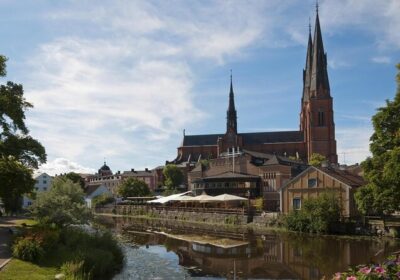
Uppsala Cathedral provides a grand setting for a less comfortable subject: the persecution of dissident Christians and atheists during the 19th century.
The stop is listed as free and lasts about 10 minutes. You may not have time for a long examination of Swedish religious policy, but the location gives the subject weight. A cathedral is not only a building for worship. It can also represent the authority of the religious and social order.
The discussion of dissent reminds you that freedom of belief was not always treated as a private matter. People who questioned established Christianity, or rejected religion altogether, could face pressure and persecution.
I appreciate that the tour includes atheists and dissenting Christians in the same broad story. It keeps the focus on the limits placed on people who did not fit accepted beliefs, rather than presenting religious history as a simple contest between good and bad sides.
A few more things to do around Sweden worth a look
- Malmö: Express Walk with a Local in 60 minutes
★ 5.0 · 8 reviews - Explore Gothenburg in 60 minutes with a Local
★ 3.5 · 7 reviews - Gothenburg: Express Walk with a Local in 60 minutes
★ 4.8 · 6 reviews - Explore Malmo in 60 minutes with a Local
★ 4.0 · 4 reviews
The Dean’s House and Sweden’s racial biology institute
The most difficult material concerns the Swedish Institute of Racial Biology, which operated from 1920 to 1958. The tour discusses what went on inside the institute and links that history to the Dean’s House and the cathedral area.
This is a vital part of the route because it shows that destructive ideas were not only imported from elsewhere. Sweden also developed its own institutions and practices around racial classification and the treatment of people labeled defective.
The tour includes the forced sterilizations of the 1940s. That subject deserves a direct and careful explanation, and the short format means the guide will likely focus on the essential points rather than cover every law or case.
I would expect this portion to be the most emotionally challenging. It also gives the walk present-day relevance. The past is not safely sealed away when institutions once used medicine, government, and social policy to control people’s lives.
The route description uses strong language about the harm done to citizens considered defective. I would treat that as a warning about the tone: this is not a detached tour of old buildings. It examines how respectable systems could produce cruel results.
Gustavianum, anatomy, and the people placed under the knife
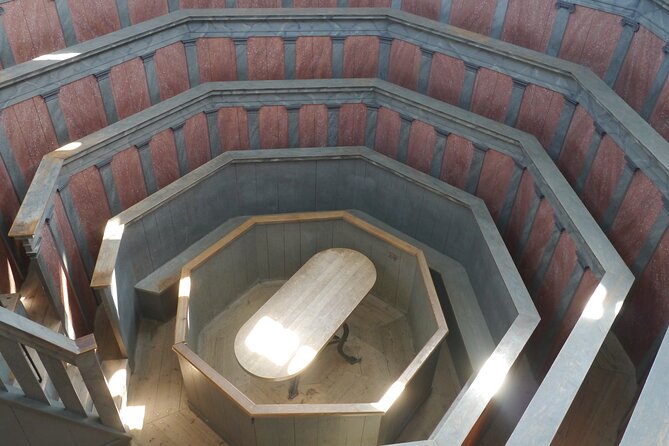
At Gustavianum, the Uppsala University Museum, the tour turns to the slave trade, the anatomical institution, and 19th-century phrenologists. It also returns to the question of forced sterilization.
The anatomical section asks which crimes could lead to a person ending up under the knife. That is a grim but revealing detail. It opens a larger question about who had control over a dead body, and how punishment could continue after death.
The phrenology discussion adds another layer. Phrenologists claimed that a person’s character could be read from the shape of the skull. On a tour about racial biology and institutional power, this subject helps show how false scientific ideas could gain authority.
The stop is listed at 10 minutes, and admission to Gustavianum is not included. You should clarify whether the guided portion takes place inside or outside the museum and budget separately if you want to enter. The supplied information confirms that admission is excluded, so do not assume your tour price covers the museum ticket.
Even without a long museum visit, the building works well as a setting for the discussion. Gustavianum connects university learning with the history of bodies, classification, slavery, and scientific authority.
The slave trade and Sweden’s less comfortable record
The tour also addresses Sweden’s 17th-century slave trade. This is an important inclusion because Sweden is often imagined abroad as unusually modern, fair, and gentle.
The subject broadens the tour beyond Uppsala itself. You are not only hearing about local streets and institutions, but also about Sweden’s role in a wider system of exploitation.
I like that this topic appears alongside university and anatomical history. It makes a useful point: a society can value education and produce impressive institutions while also participating in harmful systems.
The tour summary describes a trip to the different Uppsala, and that is a fair way to understand the route. You see the city that official history may leave out, including its ties to slavery and its treatment of people considered socially or physically inferior.
What the guide’s style seems designed to do
The guide is expected to combine serious material with some lighter facts. One description of the experience highlights a mix of dark subjects and brighter parts of Uppsala’s long history, along with time for questions.
That balance matters. An hour of uninterrupted misery would be hard to absorb, and a string of gruesome stories without context would be shallow. The better approach is to explain how the events fit together and allow room for curiosity.
The provider’s public replies are signed by Owe and Jonathan, so you may encounter one of those guides, though the supplied information does not confirm which person leads a particular departure. Both names are associated with the tour company’s history walks.
You should feel free to ask questions. The group maximum is 20, which is small enough for the guide to hear you without making the walk feel private or formal.
Price, pace, and practical value
At $36.58 per person, this is not the cheapest way to spend an hour in Uppsala. Still, the price includes the guide’s themed route and all fees and taxes, and the group is capped at 20 people.
The value depends on what you want from a city tour. If you want interior access, long museum visits, or a broad introduction to Uppsala’s famous sights, this is not the best match. If you want a focused social history walk that takes you beyond the standard highlights, the cost is easier to justify.
The tour is often booked 34 days ahead, so planning early is sensible. That lead time may be especially useful if your visit falls on a busy date.
A mobile ticket keeps arrival simple. The listed start time is 3:00 p.m. The meeting information names Riddartorget on Biskopsgatan as the start, while the route description says the collection is outside the main entrance of Uppsala City Library for the introduction. Since those details do not match perfectly, confirm the exact meeting point before setting out.
The listed end point is the City Library at Svartbäcksgatan 17. The route is a walk, and a moderate level of physical fitness is requested. Wear comfortable shoes and be prepared to remain on your feet for the hour.
Service animals are allowed. Gratuities are not included, so you can leave one separately if you feel the guide earned it.
Who should book this Uppsala history walk
I would recommend this experience to you if you have already seen the cathedral and university quarter and want a different way to understand the city. It also suits anyone interested in social history, public health, religious control, scientific racism, or the history of crime and punishment.
It is a good fit for adults and older children who can handle subjects such as prostitution, plague, slavery, anatomical dissection, racial classification, and forced sterilization. The one-hour length makes it manageable, but the content is still heavy.
I would not choose it as a cheerful first look at Uppsala, especially if you have limited time and want the city’s most famous landmarks. You may also prefer another tour if you want to enter several attractions, since Gustavianum admission is not part of the price.
Free cancellation is available up to 24 hours before the 3:00 p.m. start time. Changes or cancellations inside that window are not accepted for a refund, and the tour requires a minimum number of participants. If the operator cancels because that minimum is not met, you are offered another date or experience, or a full refund.
Should you book Uppsala Bloody History?
Book it if you want an honest, compact look at the parts of Swedish history that polite sightseeing often leaves out. The strongest material is the connection between local streets, university science, religious authority, and government policy.
I especially like the red-light district walk and the discussion of racial biology and forced sterilization. Those subjects give you more than a collection of spooky tales. They show how poverty, prejudice, and institutional power shaped real lives.
Skip it if you want a relaxed highlights tour or if the themes feel too bleak for your trip. For the right audience, though, this is a thought-provoking hour that can change how you see Uppsala after the walk is over.
FAQ
How long is Uppsala Bloody History?
The experience lasts approximately one hour.
What time does the tour start?
The listed start time is 3:00 p.m.
Where does the tour start?
The meeting information lists Riddartorget, or Knights’ Square, on Biskopsgatan in Uppsala. The route description also mentions an introduction outside Uppsala City Library, so confirm the exact meeting point before arrival.
What locations are covered?
The route includes Svartbäcksgatan, streets outside Linnéträdgården, St. Erik’s Square, Uppsala Cathedral, the Dean’s House, and Gustavianum.
Is admission to Gustavianum included?
No. Admission to Gustavianum is not included in the tour price.
Can I cancel for a full refund?
Yes. You can cancel at least 24 hours before the experience start time for a full refund. Cancellations or changes made less than 24 hours ahead are not accepted for a refund.
Just added around Sweden
- World War II Stockholm Old Town Walking Tour and Army Museum★ 4.6 · 4 reviews
- West Sweden: Sea Kayak Delight in Nature Reserves★ 5.0 · 6 reviews
- Vaxholm & Stockholm Archipelago: Guided Excursion, Day Trip★ 4.8 · 41 reviews
- Wilderness Tour with Snowmobile & Ice Fishing★ 4.9 · 28 reviews
- Self-Guided Audio Walking Tour Through Kurt Wallander’s Ystad★ 3.5 · 12 reviews
- Stockholm: Archipelago Guided Boat & Walking Tour of Vaxholm★ 3.1 · 23 reviews
- Uppsala’s biggest attractions – 1h city walk in Uppsala city.★ 4.5 · 3 reviews
- Uppsala Must See 2h city walk – 2h tour of all big attractions!★ 5.0 · 4 reviews
Historical Tours, compared.
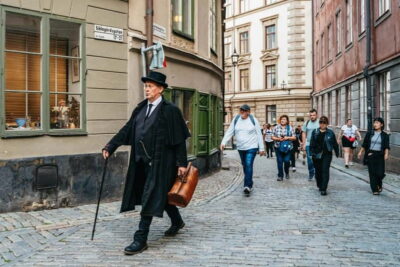
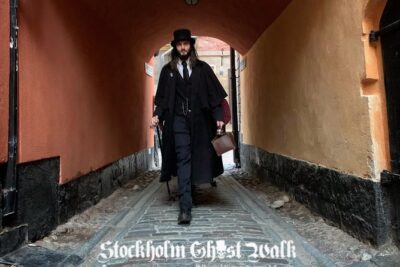
The Original Stockholm Ghost Walk and Historical Tour – Gamla Stan
Read our review →
Viking History, Runes & Countryside 9h Tour to Sigtuna & Uppsala
Read our review →
Stockholm Viking History Full Day Tour to Sigtuna + Uppsala
Read our review →
Viking History Small Group Tour from Stockholm: Half Day Including Sigtuna
Read our review →
Stockholm Old Town Gamla Stan, Historic Walking Tour, Small group
Read our review →
3-4h Viking History Short Day Tour from Stockholm
Read our review →Browse the lists this tour appears in