
Reviewed · VIKING HISTORY TOURS
Entrance ticket to The Viking Museum
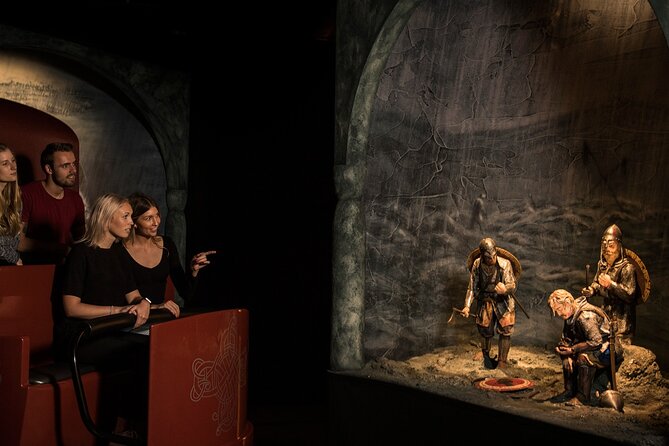
The most memorable part of Stockholm’s Viking Museum is Ragnfrid’s Saga, an 11-minute ride through a Viking Age story of farm life, raiding, and danger. Light, sound, scenery, and motion carry you from Frösala Farm into a world shaped by ships, trade, mythology, and violence.
I like the museum’s mix of real archaeological objects and hands-on replicas. I also like that you can use a multilingual audio guide yet still stop to ask guides in Viking clothing about the displays. The main caution is scale: this is a compact museum, and some adults may find the ride theatrical or the reading-heavy exhibits less exciting.
Key points before you go
- Ragnfrid’s Saga lasts about 11 minutes, with atmospheric scenes, sound effects, projections, and a moving ride.
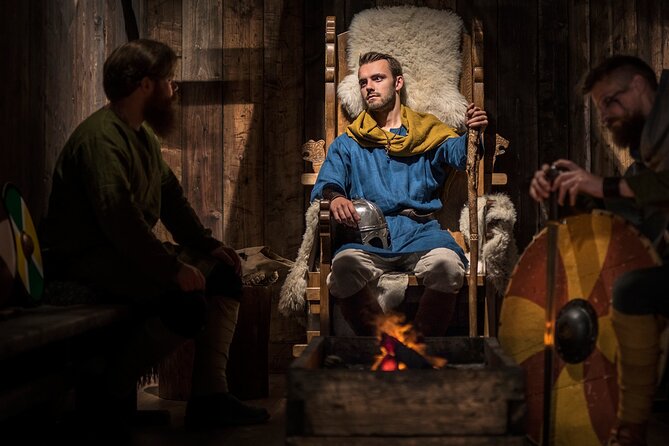
- Viking guides in period-style clothing are available to answer questions as you explore.
- A multilingual audio guide lets you learn at your own pace and in your own language.
- The museum combines artifacts with replicas, helping you connect objects to daily life.
- Plan on one to two hours, though many visitors finish the main experience in about an hour.
- The ticket costs about $22.68 per person, with free cancellation up to 24 hours before the start time.
A compact museum with a clear Viking Age story

The Viking Museum does not try to recreate an entire archaeological site. Instead, it presents a focused introduction to the Viking world through objects, films, projected scenes, sound, replicas, and short explanations.
That approach works best if you want a readable overview rather than a large collection of rare objects. You will learn about Viking raids and long-distance journeys, but also about shipbuilding, farm life, belief, trade, and the ordinary work behind the famous voyages.
The museum also works to separate fact from legend. Norse mythology appears throughout the displays, but the presentation connects myths with what archaeology can actually show. That distinction matters because the popular image of Vikings often reduces them to horned helmets and raids. Here, the picture is broader and less cartoonish.
You can move through the displays with a multilingual audio guide. If you prefer a human explanation, guides wearing Viking-style clothing are available around the exhibition. They can explain objects, add context, and answer questions rather than forcing you to follow a fixed group route.
This flexible format is useful for families and mixed-interest groups. One person can read the panels, another can listen to the audio, and someone else can stop at a replica or ask a guide for clarification.
More Viking-age Stockholm:
- Stockholm: The Viking Museum Exhibition and Viking Ride
★ 4.5 · 667 reviews - Viking History, Runes & Countryside 9h Tour to Sigtuna & Uppsala
★ 4.5 · 283 reviews - Viking History and Swedish Countryside Tour to Sigtuna & Uppsala
★ 4.5 · 162 reviews
Meeting Ragnfrid and Harald at Frösala Farm
The central ride follows Ragnfrid and her husband Harald. The story begins at Frösala Farm, giving you a look at home life before the journey turns toward the wider Viking world.
That beginning is important. The Viking Age was not only about ships crossing the sea. Most people lived with farming, household work, seasonal labor, family duties, and local concerns. Starting at the farm gives the story a more grounded point of view.
Ragnfrid tells the story as you travel. The ride then moves into scenes of plundering in the west and slave trading in the east. The subject matter is serious, even though the format is designed for a general audience and includes theatrical effects.
The 11-minute length is a strength for some visitors. You get a concentrated story without giving up half a day. It is also short enough for younger children who may tire during long museum visits.
The style will not suit everyone. Some adults may find the electric ride and story line a little artificial, particularly if they expect a major historical attraction with extensive original material. The experience is better understood as a short historical show within the museum, not as a full documentary or a realistic simulation.
Families with children may get the most from its movement and changing scenes. Older children can also use the ride as a starting point for questions about why people traveled, how raids worked, and how slavery affected Viking society.
What the objects and replicas add
The displays include archaeological objects and relics, along with many replicas that you can explore with your senses. The original objects provide evidence. The replicas help you picture how tools, clothing, weapons, household items, or ship-related equipment might have fit into daily life.
That pairing is one of the museum’s better ideas. A small object behind glass can be hard to understand without context. A replica gives you a clearer sense of size, texture, and purpose.
Still, keep your expectations measured. This is not a vast museum packed with hundreds of major finds. The collection is relatively small, and the amount of historical material is limited compared with a larger institution such as Stockholm’s Vasa Museum.
You will also encounter films, projections, and sound effects. These features break up the reading and give the exhibition a changing rhythm. They are especially helpful if you are visiting with children or if you prefer learning through images and atmosphere.
At the same time, there is plenty to read. If you are looking for nonstop interaction, you may find parts of the museum old-fashioned. The displays depend on panels and explanations as much as on technology.
I would allow time to read the sections that interest you, but I would not expect every display to offer an activity. The museum works best when you treat the interactive elements as support for the historical material rather than the entire point of the visit.
Guides, audio commentary, and the pace of the visit
The audio guide is useful when you want a structured explanation in your own language. It lets you explore independently and avoids the pressure of keeping up with a group.
The live guides add a different kind of value. Dressed in Viking-style clothing, they can answer questions about the artifacts and explain points that may not be obvious from a panel. A short conversation can often make a display more memorable than another paragraph of text.
Guide presentations are offered at intervals in different languages. It is worth checking the timing when you arrive, especially if you want a live explanation rather than only the audio guide. The exact language options and times are not stated in the supplied details, so confirm them at the museum.
The visit usually takes about one to two hours. Many people can see the main displays and complete the ride in roughly an hour, while readers and families who stop often may need longer.
That flexible timing makes the museum easy to fit into a Stockholm day. You are not committing to a long excursion, transport outside the city, or a fixed multi-hour tour. You can give it a quick hour or stay closer to two.
Other collections worth an afternoon in Stockholm:
- Stockholm: Skansen Open-Air Museum Admission Ticket
★ 4.5 · 3,427 reviews - Stockholm Pass: Save up to 50% – Includes Vasa Museum Ticket
★ 4.1 · 2,392 reviews - Stockholm: Nobel Prize Museum and Exhibition Entry Ticket
★ 4.3 · 994 reviews - Stockholm: Fotografiska Museum Entrance Ticket
★ 4.5 · 702 reviews
How the museum handles Viking myths and hard truths
Norse mythology is woven through the exhibition, but the museum also looks at practical life. You will encounter the familiar world of gods and stories alongside shipbuilding, farming, travel, and trade.
That mix helps correct a common mistake: treating the Vikings as a single culture defined only by warfare. The museum presents people who farmed, built ships, traveled, traded, settled, told stories, and sometimes raided.
Ragnfrid’s story also includes slave trading. This is not a subject to skip over if you want an honest picture of the period. Raids and journeys brought wealth to some people, while others were captured and sold.
The ride presents these events through a dramatic story rather than a long academic explanation. For a deeper understanding, use the surrounding displays and ask the guides questions. The attraction gives you an introduction, but it does not provide a full scholarly study of Viking slavery, politics, or regional differences.
This balance is useful for a first visit. You can enjoy the visual side while still recognizing that the Viking Age involved conflict, exploitation, belief, work, and family life all at once.
Is $22.68 a fair price?
At about $22.68 per person, the ticket is not a bargain-basement museum admission. The value depends on what you want from the visit.
If you want a short, easy-to-follow Viking introduction with a ride, projections, audio commentary, replicas, and staff nearby to answer questions, the price can make sense. The attraction gives you a complete experience in one to two hours, which is useful during a busy Stockholm schedule.
The value is weaker if your priority is a large collection of original artifacts. The museum is small, and you may feel the admission is high for the number of objects on display. If you are mainly interested in Swedish archaeology, the Vasa Museum may provide a larger and more substantial museum experience.
Families should also consider the ages and interests of their children. The ride and visual effects add energy, but the museum still includes considerable reading. Younger children may enjoy the movement and replicas more than the text. Teenagers who expect advanced effects may find parts of the presentation a bit cheesy.
For adults who like history, the price is easier to justify if you use the guides and take time with the context. The museum is not just the ride. Its better moments come from connecting that ride with the objects, explanations, and questions you ask.
Who will enjoy this experience most?
I would recommend the Viking Museum to:
- First-time visitors to Stockholm who want a quick introduction to Viking life.
- Families looking for a museum with movement, sound, and a short ride.
- People who prefer audio commentary or live explanations to silent displays.
- Visitors curious about the difference between Viking myth and archaeological evidence.
- Anyone with a spare hour who wants an indoor activity near public transport.
I would be more cautious if you:
- Want a large collection of original historical objects.
- Dislike reading panels in museums.
- Expect a highly advanced theme-park ride.
- Have already spent extensive time at major Viking collections and want new specialist material.
- Are choosing between this and a longer visit to Stockholm’s Vasa Museum.
The attraction is also suitable for most people, and service animals are allowed. It is near public transportation, so you do not need to arrange a complicated transfer.
Practical timing and booking advice
The ticket is mobile, which is convenient if you are moving around Stockholm with your phone rather than carrying printed papers. Confirmation is provided when you book.
The experience is commonly booked about 26 days ahead. That does not mean you must always reserve weeks in advance, especially since the museum can admit people who arrive and pay at the door. The main reason to book ahead is to place the visit neatly into your schedule, not necessarily to avoid a difficult entry process.
If you want a particular live guide session or language, timing matters more than simply holding a ticket. Check the schedule when you arrive and plan the rest of your visit around it.
You can cancel for a full refund up to 24 hours before the start time. Changes or cancellations made less than 24 hours before the start are not accepted for a refund. The cut-off follows Stockholm local time.
Should you book the Viking Museum?
Book it if you want an accessible, compact introduction to Viking life with a short atmospheric ride, clear visuals, audio support, and staff who can answer questions. The strongest parts are the Ragnfrid’s Saga journey, the blend of real objects and replicas, and the effort to show more than raids and mythology.
Skip it if you want a large archaeological collection or a serious, research-heavy museum experience. You may find the admission high for the size, and the theatrical ride will not appeal to everyone.
My practical choice would be this: families, first-time Viking enthusiasts, and visitors with one or two free hours should consider booking. If you have limited time and must choose only one Stockholm museum, compare it carefully with the Vasa Museum. The Viking Museum is a focused introduction and an entertaining history stop, not a full-day institution.
FAQ
How much does admission to The Viking Museum cost?
The listed price is about $22.68 per person.
How long does the visit take?
The visit takes approximately one to two hours. Many people complete the main experience in about one hour.
What is included with the ticket?
Admission to The Viking Museum is included, along with access to its exhibitions and Ragnfrid’s Saga ride.
Is there an audio guide?
Yes. A multilingual audio guide is available, allowing you to learn in your own language.
Are live guides available?
Yes. Guides in Viking-style clothing are present to answer questions as you explore. Guide presentations are also offered at intervals in different languages.
What is Ragnfrid’s Saga?
Ragnfrid’s Saga is an 11-minute Viking ride. It follows Ragnfrid and her husband Harald from Frösala Farm through scenes involving travel, plundering in the west, and slave trading in the east.
Is the museum suitable for children?
Most people can participate, and the ride, projections, sounds, replicas, and films can appeal to children. The museum also includes a fair amount of reading, so younger children may enjoy the visual parts more than the text.
Is the museum near public transportation?
Yes. The museum is near public transportation.
Are service animals allowed?
Yes. Service animals are allowed.
Can I cancel the ticket?
You can cancel up to 24 hours before the experience start time for a full refund. Cancellations or changes made less than 24 hours before the start time are not accepted for a refund.
Is advance booking required?
The provided information does not state that advance booking is required. The ticket can be booked online, and the experience is often booked about 26 days ahead. If you want to plan a specific visit time or attend a guide presentation in a particular language, booking ahead may help.
Just added around Stockholm
- From Stockholm: Archipelago Hike to Landsort Lighthouse★ 5.0 · 26 reviews
- Stockholm: Sigtuna and Uppsala Viking History Day Tour★ 4.7 · 41 reviews
- Private Golden Hour Photo Walk in Stockholm★ 5.0 · 3 reviews
- Best of Stockholm: Private Walking Tour with a Local★ 4.6 · 5 reviews
- Stockholm RIB Speed Boat Tour★ 5.0 · 25 reviews
- Stockholm must see: City Hall, Gamla Stan and Vasa Museum★ 5.0 · 23 reviews
- Stockholm’s Best Pub Crawl★ 5.0 · 53 reviews
- Bloody Stockholm 2h – ghosts, horror and Dark Folklore Tour★ 5.0 · 14 reviews
Viking History Tours, compared.
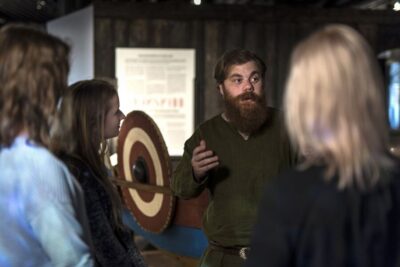

Viking History, Runes & Countryside 9h Tour to Sigtuna & Uppsala
Read our review →
Stockholm Viking History Full Day Tour to Sigtuna + Uppsala
Read our review →
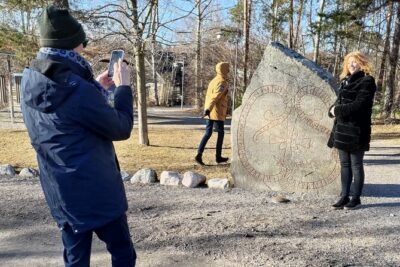
Viking History Small Group Tour from Stockholm: Half Day Including Sigtuna
Read our review →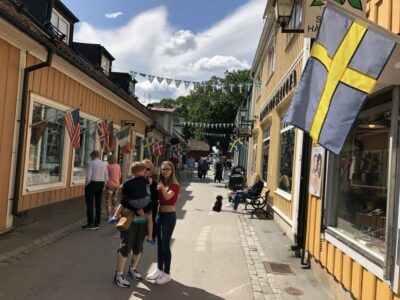

Full Day Viking Tour with Fika Swedish Coffee Break
Read our review →Browse the lists this tour appears in