
Reviewed · VIKING HISTORY TOURS
From Stockholm: Uppsala and Sigtuna Viking Sites Tour
Viking history around Stockholm is not confined to a museum case. It sits beside country roads, in church walls, under grassy burial mounds, and on weathered runestones. This nine-hour trip links those places with Sigtuna and Uppsala, giving you a useful picture of how Sweden moved from pagan beliefs toward Christianity. I especially like the small groups of up to 17 and the chance to ask questions throughout the day. I also like the pause for Swedish fika at Granby farm, which breaks up a long history lesson with coffee and homemade pastries.
The main drawback is the pace. You cover a lot of ground in one day, and the information comes steadily. One hour in Sigtuna is useful but not generous, while Gamla Uppsala has more to see than the scheduled stop allows. At $235 per person, this is not a cheap outing, so it suits you best if you want a guided history day rather than a simple sightseeing drive.
Key points at a glance
- Jarlabanke Bridge and Arkils Tingstad: Begin with runestones and Viking-era assembly sites in the countryside north of Stockholm.
- Vallentuna church: See how medieval Christianity took root in an area filled with earlier Norse history.
- Granby farm fika: Take a traditional Swedish coffee break with homemade pastries.
- Sigtuna: Walk through Sweden’s old town, see the ruins of Saint Olaf Church, and have free time for lunch or shopping.
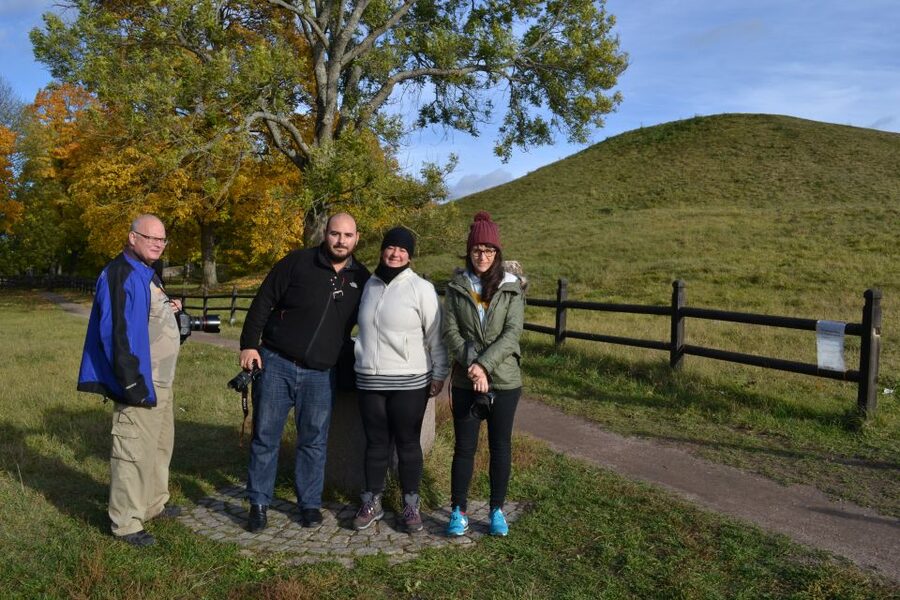
- Gamla Uppsala: Visit the famous burial mounds and the former spiritual center of pre-Christian Scandinavia.
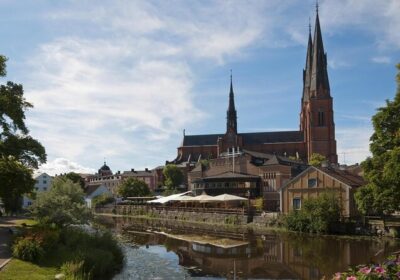
- Uppsala Cathedral: Finish with Sweden’s main cathedral and a short look at the university quarter.
From Stockholm to the Viking countryside
The day begins in Stockholm, usually with hotel pickup when it can be arranged. Pickup points include central hotels such as the Sheraton, Grand Hôtel, Hilton Stockholm Slussen, Scandic Continental, and Radisson Blu Waterfront. If you stay outside the central pickup area, the practical meeting point is by the upper street entrance of the Radisson Blu Waterfront on Klarabergsgatan.
The drive out takes about 30 minutes. This transition matters because the tour quickly moves from modern Stockholm to open countryside and older settlement sites. Transport is by a comfortable small bus, and an audio system with whisper headsets helps you hear the guide both inside and outside the vehicle.
Group size is capped at 17 people. That makes a real difference at runestones, where a large crowd can turn a careful explanation into background noise. Guides such as Urban, Olof, Carl, and Calle have led the day at different times. The strongest feature of the guiding is not theatrical Viking role-play. It is the way the guide connects local places to Swedish politics, religion, medieval Europe, and the people who shaped the country.
You need a reasonable level of English to follow the tour. The subject is presented at an academic level, though the guides also use humor and conversation to keep it moving. Plan on walking a few hundred meters at several stops and standing outside for a while.
Other small towns within reach of Stockholm:
- Viking History, Runes & Countryside 9h Tour to Sigtuna & Uppsala
★ 4.5 · 283 reviews - Viking History and Swedish Countryside Tour to Sigtuna & Uppsala
★ 4.5 · 162 reviews - Viking History Small Group Tour from Stockholm: Half Day Including Sigtuna
★ 4.5 · 111 reviews
Reading the runestones at Jarlabanke Bridge
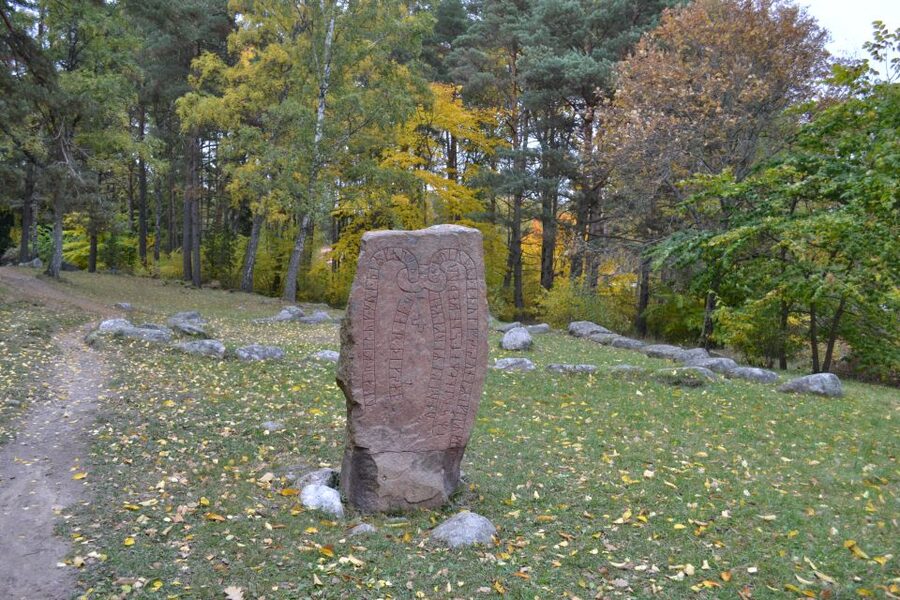
Your first major stop is Jarlabanke Bridge, about 30 minutes from Stockholm. The name refers to a Viking-era figure associated with the runestones in this area. Here, the guide helps you read the stones as public statements rather than treating them as mysterious decoration.
Runestones can tell you about family, land, travel, faith, and status. Their short inscriptions offer a direct link to people who lived more than a thousand years ago. You will not simply stop for a photograph and move on. The guide explains what the markings mean and how historians use them, while also answering questions about Viking society.
The stop lasts around 30 minutes. Wear shoes that are comfortable on uneven ground, and keep your camera ready. This is one of the best places to understand the tour’s basic method: see an actual object, then place it within a larger story.
Arkils Tingstad and the business of Viking society
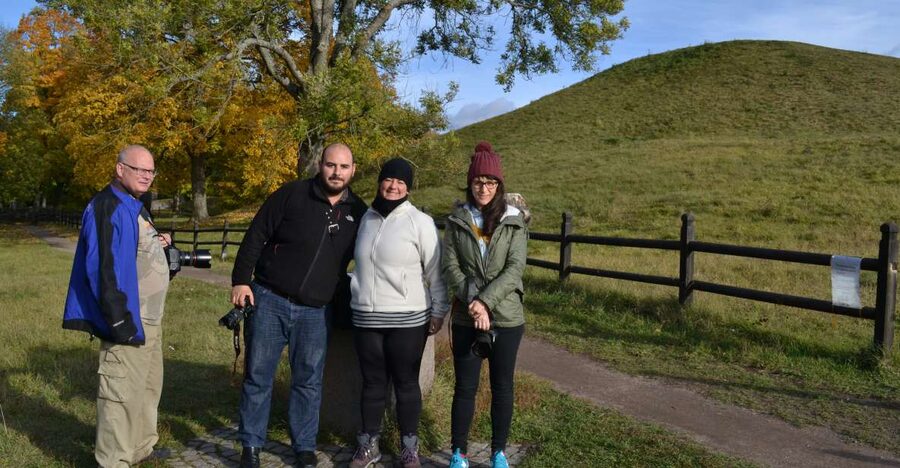
A short drive brings you to Arkils Tingstad. The word ting refers to an assembly, a place where people gathered to settle disputes, make decisions, and conduct public business. This stop adds a social and political side to Viking history.
Popular culture often reduces Vikings to ships and battles. Arkils Tingstad gives you a more useful view. Communities needed laws, agreements, family alliances, and systems for resolving conflict. The guide explains how the site fits into that world and encourages questions rather than delivering a fixed speech with no room for discussion.
Again, you spend about 30 minutes here. The outdoor format means the experience depends partly on the weather. In rain, cold, or strong wind, you will appreciate the headset and the nearby indoor stops later in the day.
Vallentuna church and the turn toward Christianity
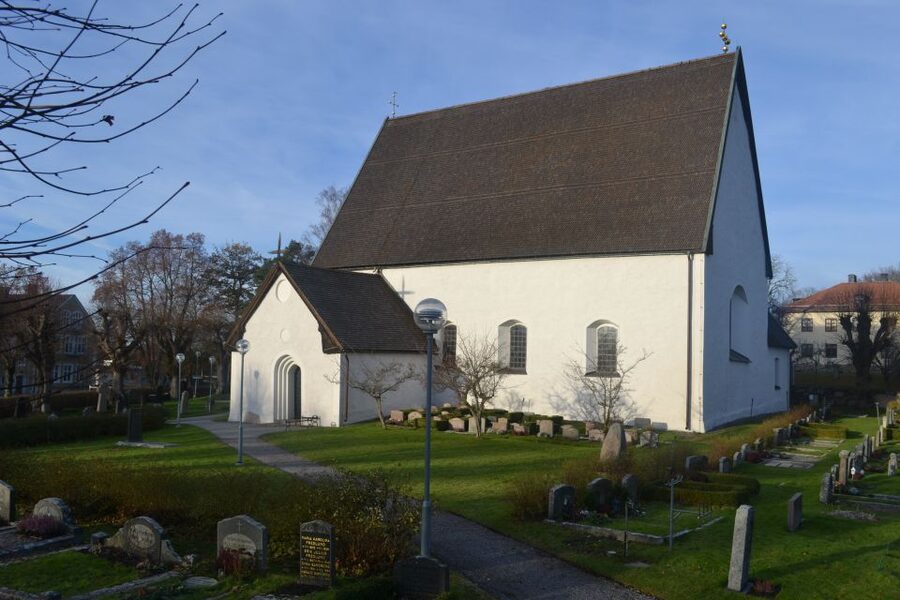
The next stop is Vallentuna church, reached after a short drive. The church gives the tour a clear change of tone. You have been looking at earlier Norse sites, and now you enter a medieval Christian building tied to the period when new religious ideas were reshaping Sweden.
The church is important not only as a place of worship but also as evidence of changing power and identity. The guide discusses the transition from pagan traditions to Christianity, a process that did not happen overnight or in exactly the same way everywhere.
I like this part of the route because it keeps the story from becoming a simple celebration of the Viking age. You see both continuity and change. Old beliefs, local customs, royal ambitions, and Christian institutions all meet in the same region.
More Viking-age Stockholm:
- Stockholm: The Viking Museum Exhibition and Viking Ride
★ 4.5 · 667 reviews - Entrance ticket to The Viking Museum
★ 4.0 · 301 reviews - From Stockholm: Viking Culture Guided Tour with Transfer
★ 4.5 · 81 reviews - Full Day Viking Tour with Fika Swedish Coffee Break
★ 4.5 · 81 reviews
A proper Swedish fika at Granby farm
At Granby farm, the tour pauses for fika, Sweden’s familiar coffee-and-something-sweet tradition. The break includes coffee and homemade pastries, and lasts about 45 minutes. The stop is listed as HÖKERIET in the schedule, so do not be surprised if the name on your booking information differs from the way the stop is described during the day.
This is more than a snack break. After several outdoor sites and a steady flow of dates and names, you need time to reset. Fika gives you that pause without breaking the theme of the day. The setting also lets you see a quieter part of the region rather than spending every minute inside the bus or at a major monument.
The fika is included, but lunch is not. Save room in your budget for the meal in Sigtuna. The route does not promise a single fixed lunch arrangement, so you get some choice during the free period there.
Sigtuna, Sweden’s old town with time to wander
Sigtuna was founded in the late Viking era and is one of the day’s most pleasant changes of pace. After the countryside sites, you have about an hour of free time in town, followed by a guided visit of roughly 15 minutes.
The tour includes the ruins of Saint Olaf Church. Saint Olaf was a Norwegian Viking warrior who converted to Christianity and later became a saint. His story fits the day’s larger subject: the movement of people and ideas across Scandinavia, and the gradual shift from older Norse beliefs to Christianity.
Your free hour is useful but limited. You can look for lunch, browse shops, walk the picturesque streets, or simply rest. If you want a relaxed meal and extensive shopping, the clock may feel tight. I would decide in advance whether food or wandering matters more to you.
Sigtuna is also a good photo stop, but remember that the main value lies in the mix of old town streets, church ruins, and historical explanation. You are not being given a full independent tour of every corner. The guide provides the context, then you get a short chance to explore on your own.
Gamla Uppsala and the great burial mounds
After about 40 minutes on the road, you reach Gamla Uppsala, or Old Uppsala. This is one of the most important stops for anyone interested in Scandinavian pre-Christian history. The great burial mounds date from the first centuries AD through the end of the Viking era.
The mounds are striking because their size hints at the power of the people buried there. They also show that this was not an isolated farm settlement. Gamla Uppsala was a major political and spiritual center, associated with midwinter blot festivals and gatherings from across Scandinavia.
The guide explains the legends surrounding the old pagan temple, including the tradition that it was burned in 1087. A church was later built on the site, and it became the country’s main cathedral and the seat of Sweden’s first archbishop before that role moved to present-day Uppsala.
You spend about 45 minutes here. That is enough to understand the site and see the major features, but not enough for an unhurried visit to every nearby attraction. If you want the museum or a longer walk around the mounds, you may need to return independently on another day. This is one of the tour’s clearest tradeoffs: you gain a broad regional story, but no single stop receives unlimited time.
Uppsala Cathedral and the university quarter
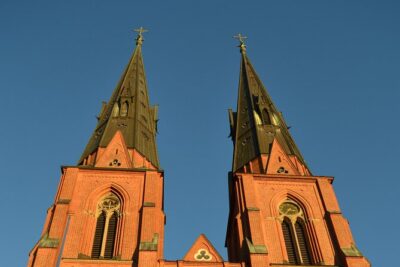
The final main visit is Uppsala Cathedral, reached after a short drive from Gamla Uppsala. It is Sweden’s principal cathedral and provides a grand finish after the more open and archaeological sites earlier in the day.
The cathedral visit lasts about 40 minutes. The guide points out historical details and explains why the building matters within Sweden’s religious and national story. This is a stop where a good guide makes a large difference. Without context, a cathedral can blur into a series of stone arches and royal names. With explanation, it becomes part of the country’s shift in faith, government, and culture.
Before leaving Uppsala, you also get a brief guided look through the university areas. Uppsala is a university town, and this final walk adds another layer to the day. The route has moved from runestones and burial mounds to the institutions that shaped later Swedish intellectual and religious life.
The return to Stockholm takes about an hour. It is a good time to ask follow-up questions or simply rest after a full day.
What $235 gets you
At $235 per person, the price needs a closer look. You are paying for roughly nine hours of transport, a small group, an English-speaking guide, hotel pickup and drop-off when possible, the fika, and admission or guided access to several important sites. You also avoid arranging separate trips to rural runestones, Sigtuna, Gamla Uppsala, and Uppsala.
I see the value most clearly if you have limited time in Stockholm and want a single, organized history day. The route would be awkward to duplicate without a car, careful research, and a lot of coordination. Hotel pickup also removes the need to navigate an early meeting point, though pickup depends on location and local traffic restrictions.
The price is harder to justify if you mainly want free time, independent photography, or a low-cost look at Uppsala. You spend much of the day listening and riding between sites. One person found the tour overpriced despite enjoying it, and that is a fair caution. The quality of the guide is central to the value.
Weather, walking, and the right level of interest
This is an outdoor tour in part, so dress for the forecast. Sweden can be cold, wet, or windy even when the day begins comfortably in Stockholm. Bring layers and shoes that handle short walks over uneven surfaces.
You do not need to be in top physical shape. You should be able to walk a couple of hundred meters and stand for a while at several stops. The tour is not designed for long hikes, but it is also not a fully seated sightseeing ride.
The day works best for you if you enjoy history, religion, archaeology, and discussion. It suits Viking enthusiasts, but you do not need prior expertise. The guide explains the basics and then adds more detail for people who want it. Families with older children may enjoy the runestones and burial mounds, provided everyone can manage a long day and an English-language academic presentation.
Should you book this Viking tour?
I would book it if you want to understand how Viking-era Sweden connects to medieval Christianity, Sigtuna, and modern Uppsala. The range is the tour’s great strength. You see original runestones, an assembly site, a medieval church, an old town, burial mounds, and Sweden’s main cathedral in one carefully linked day.
I would skip it if you want a slow visit to Sigtuna or Gamla Uppsala, or if $235 feels high for a guided day. The schedule is full, and the history comes thick and fast. For the right reader, though, the small group, thoughtful guiding, comfortable transport, and fika make this a strong use of one day from Stockholm.
FAQ
How long does the tour last?
The tour lasts about nine hours, including transport between Stockholm, the Viking sites, Sigtuna, Gamla Uppsala, Uppsala, and the return to Stockholm.
What language is the tour conducted in?
The live tour is conducted in English, and the included audio system is also in English. You should have a reasonable level of English to follow the historical discussion.
Is hotel pickup included?
Hotel pickup and drop-off are included when possible. Pickup is available from a list of Stockholm hotels and may also be arranged from a nearby location.
Where is the main meeting point?
The meeting point is at the Radisson Blu Waterfront Hotel, on the upper street, Klarabergsgatan, by the hotel entrance.
How large is the tour group?
The group has a maximum of 17 people. The small format allows more questions and easier conversation with the guide.
What food is included?
The tour includes a Swedish fika, normally coffee and homemade pastries at Granby farm. Lunch in Sigtuna is not listed as included.
How much free time do I get in Sigtuna?
You have about one hour of free time in Sigtuna for lunch, shopping, walking through town, or relaxing. A separate guided visit lasts about 15 minutes.
Can I visit the Uppsala museum during the tour?
A museum visit is not included in the scheduled program. The Gamla Uppsala stop lasts about 45 minutes and focuses on the burial mounds and the site’s history.
How much walking is required?
You should be able to walk a couple of hundred meters and stand for a while. The tour includes outdoor stops, so comfortable footwear and weather-appropriate clothing are important.
Can I cancel the booking?
You can cancel up to 24 hours in advance for a full refund. The reserve-now, pay-later option is also available.
Just added around Stockholm
- From Stockholm: Archipelago Hike to Landsort Lighthouse★ 5.0 · 26 reviews
- Stockholm: Sigtuna and Uppsala Viking History Day Tour★ 4.7 · 41 reviews
- Private Golden Hour Photo Walk in Stockholm★ 5.0 · 3 reviews
- Best of Stockholm: Private Walking Tour with a Local★ 4.6 · 5 reviews
- Stockholm’s Best Pub Crawl★ 4.5 · 134 reviews
- City Hall, Old Town & Vasa Museum – all-in-1 guided experience★ 5.0 · 38 reviews
- Stockholm RIB Speed Boat Tour★ 5.0 · 25 reviews
- Stockholm must see: City Hall, Gamla Stan and Vasa Museum★ 5.0 · 23 reviews
Viking History Tours, compared.
Viking History, Runes & Countryside 9h Tour to Sigtuna & Uppsala
Read our review →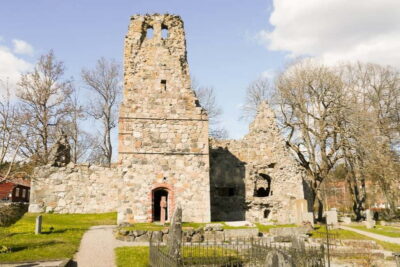
Stockholm Viking History Full Day Tour to Sigtuna + Uppsala
Read our review →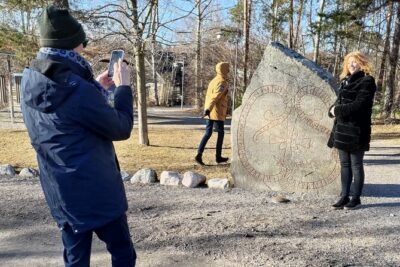
Viking History Small Group Tour from Stockholm: Half Day Including Sigtuna
Read our review →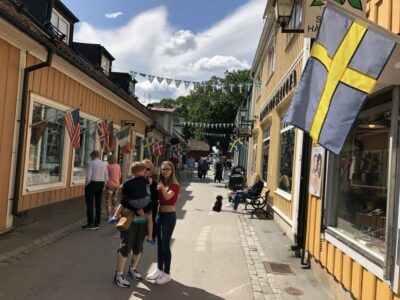
Full Day Viking Tour with Fika Swedish Coffee Break
Read our review →Browse the lists this tour appears in