
Reviewed · GHOST AND DARK HISTORY WALKS
Bloody Stockholm 2h – ghosts, horror and Dark Folklore Tour
Stockholm’s prettiest streets have a grim side. On this walking tour, you hear about executions at Stortorget, the folklore of dead bodies and curses, restless spirits, trolls, and water creatures said to lure people to their deaths. It is part dark history lesson, part ghost walk, and part introduction to old Swedish beliefs.
I like the small-scale storytelling and the way the route uses real streets, church doors, and waterfront steps instead of a stage or museum room. I also like the mix of documented events and folklore, from the roughly 90 executions connected with the Danish conquest of Stockholm to the Swedish Tomte and the frightening Näcken.
The main thing to consider is that this is not a nonstop ghost scare. One review describes it more accurately as an informative stroll with dark tales. Folklore receives attention, but the balance can shift toward general Stockholm history, depending on the guide and the questions in your group.
Key points at a glance
- Stortorget begins with executions and body-part folklore, including beliefs about blood, gallows, and magical cures.
- Prästgatan reveals an old neighborhood once linked with Hell, a memorable detail on a very atmospheric street.
- Swedish folklore takes center stage, with trolls, elves, the Tomte, Näcken, the Bäckahästen, and the Skogsrå.
- The tour ends at Saint Jacob’s Church, outside the Old Town near Kungsträdgården.
- Guides include Jonathan and Åsa, both praised for clear storytelling, humor, and detailed answers.
- The advertised duration is about 90 minutes, though one tour lasted more than two and a half hours.
Stockholm’s dark stories begin at Stortorget
Meet your guide at the Nobel Prize Museum on Stortorget, the Old Town square surrounded by colorful historic buildings. The setting is almost too cheerful for the opening subject: death, public punishment, and the magical use of human remains.
Here you learn about the executions of around 90 people connected with the Danish King Kristian’s capture of Stockholm. The square becomes more than a scenic place for photographs. It becomes a location tied to fear, power, and public spectacle.
The folklore section is especially unusual. The tour explains beliefs about using the blood of the dead in curses, gallows parts in brewing, and other body parts for magical purposes. This is not presented as a horror attraction with props. The interest comes from seeing how people once explained danger, illness, bad luck, and revenge.
I find this opening useful because it sets the tone. You are not simply collecting ghost stories. You are looking at the ideas people used to make sense of death and the unknown. The material can be graphic, so it may not suit very young children, although one family found the tour suitable for a 10-year-old.
Other after-dark walks around Stockholm:
- Stockholm: Ghost Walk and Historical Tour
★ 4.7 · 2,206 reviews - The Original Stockholm Ghost Walk and Historical Tour – Gamla Stan
★ 4.5 · 1,165 reviews - Bloody Stockholm: ghosts, horror and dark folklore 2h
★ 4.8 · 12 reviews
Prästgatan and the street called Hell
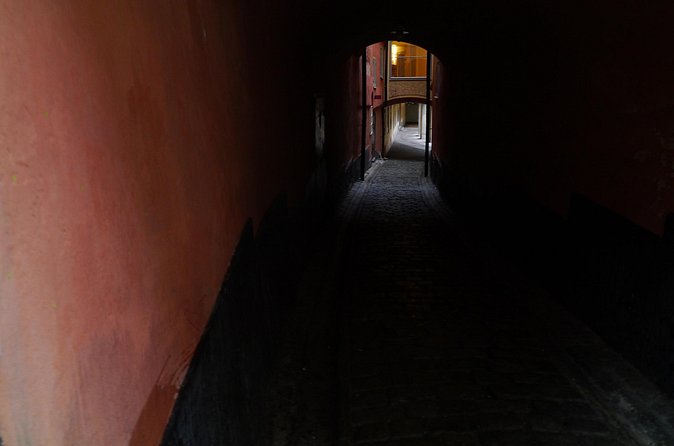
The group then walks along Prästgatan, one of Gamla Stan’s narrow lanes. The guide discusses the part of the street once known as Hell, where the excursionist lived.
This stop is brief, around ten minutes, but it shows why a walking tour works well here. The Old Town’s tight lanes and old doorways give the stories a physical setting. You are not hearing about some distant castle or battlefield. The route keeps pointing to the streets beneath your feet.
Do not expect a full architectural tour of Prästgatan. The purpose is to connect a place name with the people and beliefs attached to it. If you enjoy the contrast between polished Stockholm and its rougher past, this should be one of the more memorable sections.
The route is also easy to follow. It stays in and around the Old Town, with no need for a bus, ferry, or paid site admission. You simply walk from one story to the next.
Iron, newborns, elves, and the Swedish Tomte
At a house door in the Old Town, the subject shifts from historical death to household protection. The guide explains how iron was used against vaesen, supernatural beings in Scandinavian folklore.
The stories include elves arriving with the mist, understood as souls that had not found rest. You also hear about the Swedish Tomte, a household or farm spirit that is familiar to modern audiences in a much friendlier form than the creatures described here.
This part also covers doors and newborn children. Before baptism, a baby was thought to lack protection from trolls and the Devil. The guide explains the measures people were supposed to use to guard the home and child.
I like this stop because it makes folklore practical. Instead of listing creatures by name, it shows how supernatural beliefs shaped ordinary behavior. A door was not merely an entrance. It could be a weak point. A newborn was not simply welcomed into the family. The period before baptism carried special danger.
The material also gives you something to watch for during later walks through Sweden. Iron, thresholds, church doors, and household customs can carry meanings that are easy to miss if you only look at the buildings.
Logårdstrappan and the dangers beneath the water
At Logårdstrappan, the stories move to water. This is the point where you hear about several Swedish water spirits, including Näcken, the Bäckahästen, the Sjörå, and the Skepps-rå.
Näcken is linked with the water and with luring people toward danger. The Bäckahästen is described as the Swedish version of the Kelpie, the deceptive water horse. The Sjörå and Skepps-rå belong to the world of sea and ship folklore.
The common thread is simple: water was beautiful, useful, and deadly. Before modern rescue services and reliable maps, a river, lake, or sea crossing could become a matter of life and death. Folklore gave those dangers a face and a personality.
This stop adds variety to the route. The opening focuses on executions and human violence. Here, the threat comes from nature and the unseen beings believed to control it. You also get a different view of Swedish life, where stories were shaped by forests, rivers, coastlines, boats, and changing weather.
The tour takes place outdoors, so poor weather can affect your comfort. One person still enjoyed the walk in less-than-ideal weather, but you should dress for conditions and wear shoes suited to city walking.
A few more things to do around Stockholm worth a look
- Stockholm: 2-Hour RIB Speed Boat Tour of the Archipelago
★ 4.9 · 396 reviews - Stockholm Speed Boat 2 Hour Archipelago Tour
★ 5.0 · 139 reviews
Kungsträdgården brings in the forest spirits
The route continues toward Kungsträdgården, where the guide introduces more dangerous vaesen. The Skogsrå, also called the Huldra, is among the key figures. You also hear about the Myrling, an undead child from folklore.
These stories are darker than the cheerful image often associated with Scandinavian tales. The Skogsrå belongs to the forest and is presented as a dangerous being. The Myrling reflects older fears surrounding death, children, and the unsettled dead.
This section lasts around 20 minutes, making it one of the longer stops. That extra time matters because it gives the guide room to explain several creatures rather than rushing through a list of names.
The folklore is also where the tour most clearly shows its limits. One guide acknowledged that an earlier version spent too little time on dangerous beings and too much on other historical material. That is useful to know if folklore is your main reason for booking. The focus may continue to develop, and the exact balance depends on the guide.
Still, the broader mix is part of the appeal. You receive dark folklore alongside facts about Stockholm, rather than a string of disconnected supernatural tales.
Saint Jacob’s Church and the final warnings
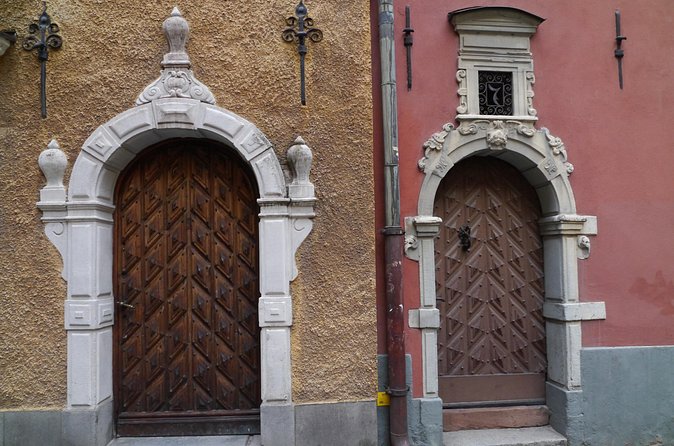
The final stop is outside Saint Jacob’s Church on Västra Trädgårdsgatan. The discussion covers the church door, weak points in the building, an exorcism involving a child at baptism, and ways to punish a worst enemy.
This ending returns to the themes introduced earlier: protection, baptism, evil, and the fear of vulnerable places. A church might seem like the safest location in town, but the stories ask you to consider how people once understood its doors, boundaries, and spiritual defenses.
The tour finishes outside the church, just beyond the Old Town on the north side of Kungsträdgården. From there, it is about a ten-minute walk back to the starting point. That arrangement is convenient if you want to continue exploring the park or head toward nearby public transport, but remember that the tour does not return you to Stortorget.
The church itself is an exterior stop. You should not book this expecting an indoor church visit or a museum admission. The guide and storytelling are the main attractions.
A guide-led walk with room for questions
The quality of this experience depends heavily on the guide. Jonathan is associated with the tour and has been described as funny, open to questions, and able to supply plenty of dark historical detail. Åsa has also led the walk, with an engaged approach that worked especially well for a small family group.
That personal element is important. The route has a set structure, but the experience is not just a recorded script. Questions can shift the emphasis toward history, folklore, executions, church customs, or supernatural beings.
The strongest aspect is the guides’ ability to connect the stories with the streets. You are not only hearing that Stockholm had a violent past. You are standing in the Old Town while the guide explains what happened and how later folklore grew around death, danger, and the unknown.
The maximum group size is 30 people. That is not an especially tiny group, but it is still manageable for a street walk. A smaller booking can feel much more personal. One group of three found that having a private-feeling experience made the tour better.
The tour is offered in English. The mobile ticket is practical, and confirmation normally arrives when you book, though bookings made within 18 hours of departure are confirmed as soon as possible, subject to availability.
Is the 90-minute length accurate?
The supplied duration is approximately one hour and 30 minutes, while the tour name refers to two hours. The timed stops add up to about 75 minutes, leaving room for walking, questions, and transitions.
In practice, the timing may stretch. One guide reportedly continued for more than two and a half hours, then acknowledged that the session had run long. That can be a bonus if you enjoy detailed stories and have a free evening. It can be a problem if you have a dinner booking, concert, or train to catch.
I would leave at least two hours free, and more if you like asking questions. Treat the 90-minute figure as an approximate target rather than a hard finish time.
Value, group size, and who should book
No admission fees are required at the stops, and a guide is included. The value therefore comes from the person leading the walk, the research behind the stories, and the way the route connects folklore with real places.
I consider it good value for someone who wants context rather than a quick photo walk. You get executions, old street names, protective customs, water spirits, forest beings, church folklore, and general Stockholm history in one outing.
The tour suits you best if you:
- Like dark history, murder, executions, and old punishment customs
- Enjoy ghost stories but do not need theatrical scares
- Want to learn about Swedish folklore and supernatural beings
- Prefer walking through real places to visiting a themed attraction
- Are comfortable with stories involving death, curses, and the undead
- Have enough flexibility for the tour to run longer than planned
It may not suit you if you want a fast-paced horror show, a tour entirely devoted to ghosts, or a visit inside historic buildings. The tone is educational and story-driven. Humor and questions are welcome, but the experience remains a walking lesson.
The route is near public transportation, and service animals are allowed. Most people can participate, although the tour involves walking outdoors through the Old Town and onward to Saint Jacob’s Church.
Should you book Bloody Stockholm?
Book it if you want to see Stockholm from its less polished side. The best moments come when a familiar lane or church door gains a disturbing second meaning.
I would choose this tour for a first or second evening in Stockholm, especially if you have already seen the main sights and want a different way to understand Gamla Stan. Go in expecting dark folklore and historical storytelling, not a haunted-house performance.
The strongest reasons to book are the unusual subjects, the real Old Town setting, and the guides’ apparent strength with facts, humor, and questions. The main caution is focus. The walk can lean toward general dark history, and the timing can run long. If those points work for your plans, this is a memorable and fairly unusual way to spend part of an evening.
FAQ
Where does the tour start?
It starts at the Nobel Prize Museum, Stortorget 2, 103 16 Stockholm, Sweden.
Where does the tour end?
It ends outside Saint Jacob’s Church at Västra Trädgårdsgatan 2A, 111 53 Stockholm, Sweden.
How long does the tour last?
The stated duration is approximately one hour and 30 minutes. The tour title refers to two hours, and one session lasted more than two and a half hours.
What language is the tour offered in?
The tour is offered in English.
What subjects are covered?
The tour covers executions, death folklore, curses, protective customs, trolls, elves, the Swedish Tomte, Näcken, the Bäckahästen, the Sjörå, the Skepps-rå, the Skogsrå, the Myrling, and church folklore.
Is admission to the stops included?
The listed stops have no admission charge. A guide is included.
How large can the group be?
The maximum group size is 30 people.
Are service animals allowed?
Yes, service animals are allowed.
Can I cancel for a full refund?
Yes, if you cancel at least 24 hours before the experience starts. Cancellations within 24 hours are not refunded, and changes within that period are not accepted.
Just added around Stockholm
- From Stockholm: Archipelago Hike to Landsort Lighthouse★ 5.0 · 26 reviews
- Stockholm: Sigtuna and Uppsala Viking History Day Tour★ 4.7 · 41 reviews
- Private Golden Hour Photo Walk in Stockholm★ 5.0 · 3 reviews
- Best of Stockholm: Private Walking Tour with a Local★ 4.6 · 5 reviews
- Stockholm’s Best Pub Crawl★ 5.0 · 53 reviews
- Stockholm: Underground Metro Art Ride with a Local★ 4.5 · 18 reviews
- Stockholm: Underground Metro Art Ride with a Local Guide★ 4.6 · 39 reviews
- Bloody Stockholm: ghosts, horror and dark folklore 2h★ 4.8 · 12 reviews
Ghost and Dark History Walks, compared.
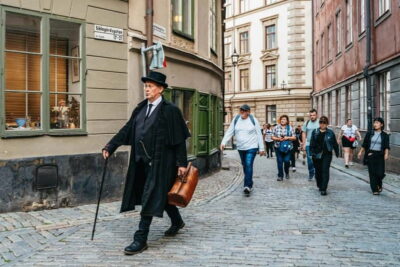
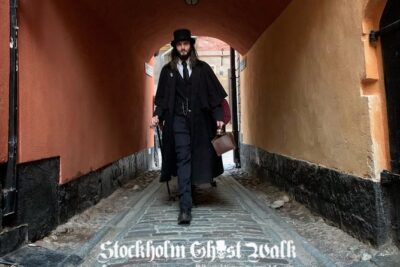
The Original Stockholm Ghost Walk and Historical Tour – Gamla Stan
Read our review →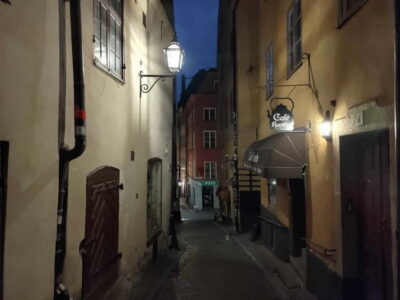
Bloody Stockholm: ghosts, horror and dark folklore 2h
Read our review →Browse the lists this tour appears in