
Reviewed · ART AND DESIGN TOURS
Stockholm: Underground Metro Art Ride with a Local Guide
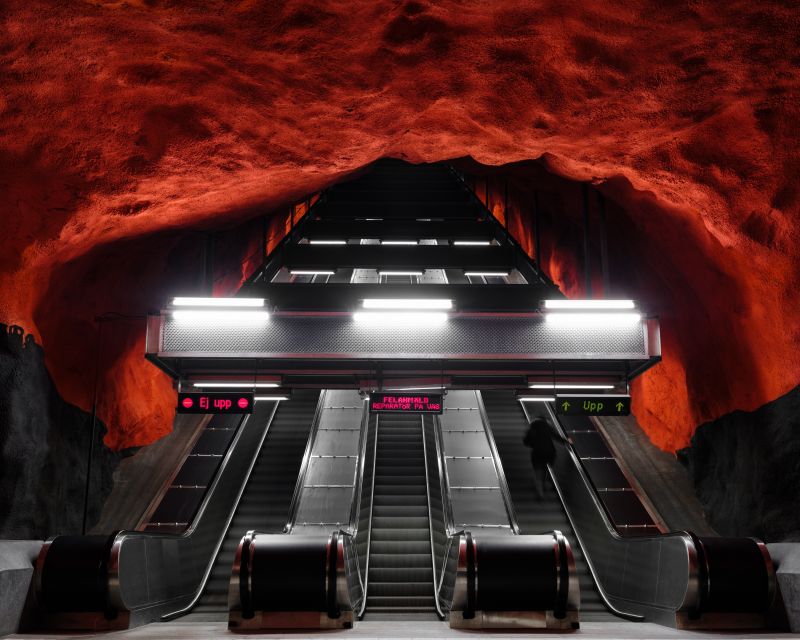
Stockholm’s subway is not just a way to get around. It is a public art collection spread across more than 90 stations, with work by over 150 artists from the 1950s through the 2000s. This tour helps you see the metro as a running record of Swedish art, rather than a collection of platforms you rush through.
I like the small group of up to eight, which gives you room to ask questions and adjust the pace. I also like the practical local advice about cafes, bars, restaurants, and other places to visit after the tour. The main drawback is the price: at $128 per person for 1.5 to 2 hours, this is costly for a walking tour, even with the metro ticket included.
Key points at a glance
- More than 90 art stations: See selected works from a public collection spread across Stockholm’s underground network.
- A changing art story: Follow Swedish art from the 1950s to the 2000s through paintings, mosaics, sculptures, reliefs, and installations.
- Small-group attention: Join a group of no more than eight people, or choose a private option if available.
- Local advice included: Ask your guide for useful suggestions about cafes, bars, restaurants, and less obvious places to visit.
- Metro ticket included: You do not need to buy a separate subway ticket for the tour.
- Flexible route: Stops can change with weather, group interests, and walking pace.
Why Stockholm’s subway deserves a tour
The Stockholm metro is one of those city attractions that can be easy to miss because it is doing an ordinary job. You use it to get from one neighborhood to another, then hurry up the stairs toward a museum or old-town street. But much of the system itself is decorated with serious, large-scale public art.
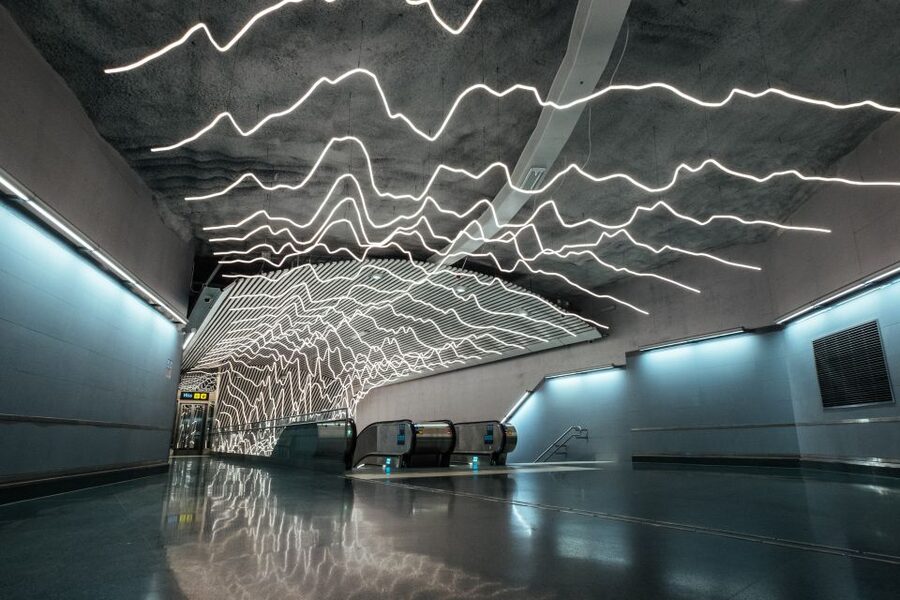
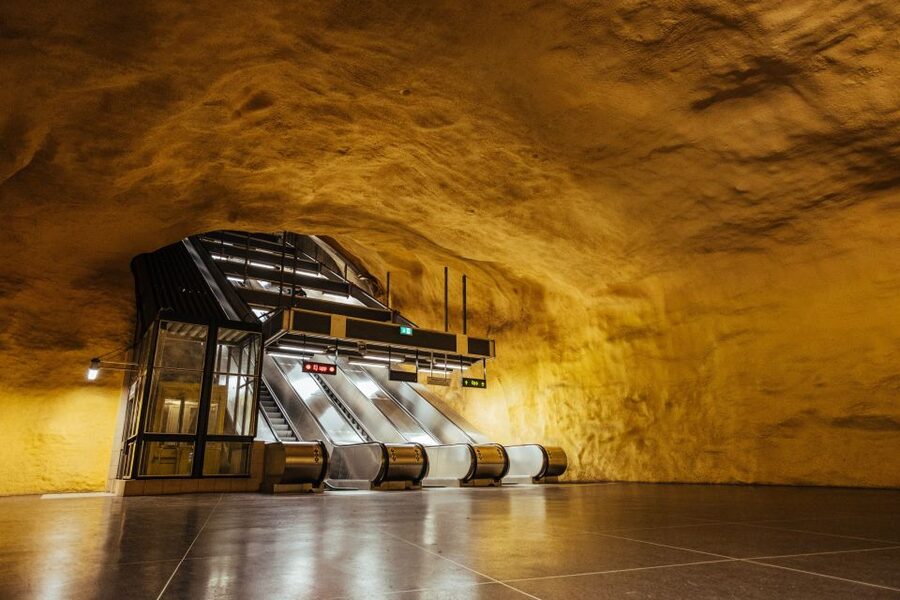
More than 150 artists have contributed work across the network. The result is not one uniform style. You may see colorful paintings, carefully built mosaics, sculptures, reliefs, and temporary or changing installations. The stations also include archaeological details, such as ancient columns, which add a historical layer to the art.
I like this format because it connects art with daily life. You are not entering a silent gallery where every piece has a label and a spotlight. You are standing in a working metro station, with trains arriving and people going about their day. That setting makes the art feel like part of Stockholm rather than a separate attraction reserved for museum hours.
A local guide also changes what you notice. Without help, you may see a painted wall but miss the reason a particular design matters, or walk past a sculpture without realizing it belongs to a larger artistic program. The value of the tour rests heavily on the guide’s ability to point out those details and explain them in plain language.
Other art and design days in Stockholm:
- Millesgården Museum: sculpture park and art galllery
★ 4.8 · 20 reviews - Stockholm: Underground Metro Art Ride with a Local
★ 4.5 · 18 reviews - Cube of Art Uppsala Museum of Interactive Art
★ 4.5 · 69 reviews
Meeting at T-Centralen
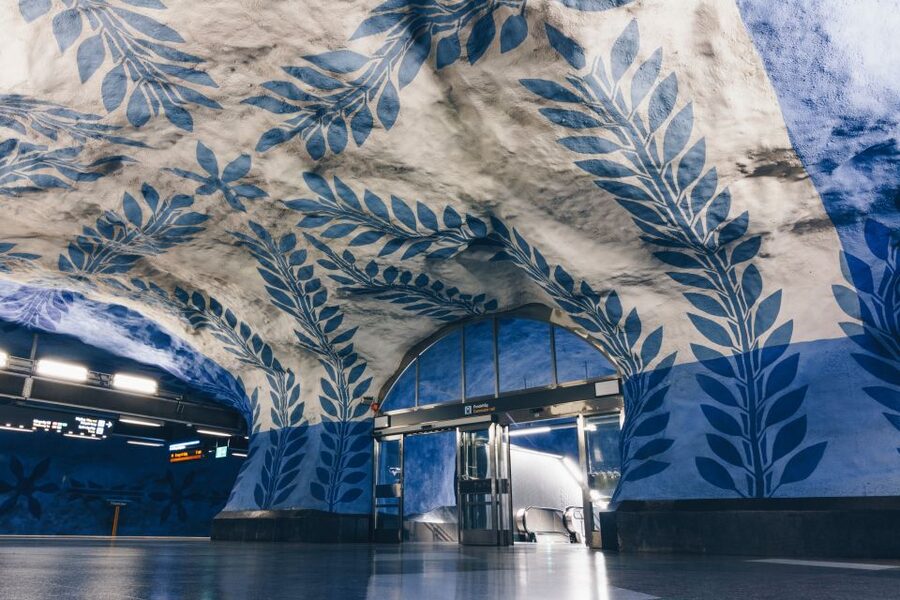
The tour begins beside T-Centralen metro station, in front of the Nils Ericson statue. This is a sensible meeting point because T-Centralen is central to Stockholm’s metro system and easy to identify once you reach the station area.
You should arrive with comfortable shoes and a charged smartphone. The tour involves moving through stations and walking between different parts of the network, so this is not a sit-down presentation. The metro ticket is included, which removes one small task at the start and means you can begin focusing on the art.
The meeting point is public and central, but the supplied details do not give a precise street address or instructions for a particular station exit. Give yourself extra time to find the Nils Ericson statue, especially if you are unfamiliar with Stockholm’s underground signs.
A moving tour through Swedish art
The route is designed around selected stations rather than every art site in the metro system. That is important. With more than 90 art stations, seeing everything would require far more than two hours. Instead, the guide chooses some of the more striking and meaningful works.
You can expect a mix of visual styles. Paintings may fill large sections of a station, while mosaics add close-up detail that rewards a slower look. Sculptures and reliefs change the feel of a platform or passageway, and installations may offer a more modern or unexpected contrast.
The tour covers the development of Swedish art from the 1950s to the 2000s. You are not simply looking at decoration. The sequence gives you a way to think about changes in artistic taste and public culture over several decades.
The exact stops are not fixed in the information provided. The guide may adjust the route based on the group’s interests, walking pace, and weather conditions. That flexibility is useful for a small group, but it also means you should not book this expecting a rigid list of named stations.
I prefer this kind of adaptable route when the guide uses the flexibility well. If you are especially interested in mosaics, sculpture, modern installations, or the cultural side of the metro, say so early. A private group should have even more room to shape the experience around those interests.
The details you might miss alone
The best reason to take this tour is not simply to see a decorated station. You can ride the metro by yourself and visit some famous art stops at very little cost. The guide’s job is to help you see what deserves attention and explain details you might otherwise walk past.
The archaeological elements are a good example. Ancient columns and other historic features appear in this underground setting, creating an odd but appealing contrast with modern public transport. They add another subject to the tour, beyond the development of Swedish art.
You may also gain a clearer sense of how public art works in a city. A museum presents art as an object for viewing. Stockholm’s metro places art along your daily route, where it has to work around movement, noise, practical needs, and changing audiences.
This is where guide quality matters most. Agneta has been praised for being informative, kind, and generous with her time, including showing an additional station after the planned tour. Rikta has also been praised for a professional, clear, interesting, and accommodating approach. These guides may not be available on your date, but their strong performance shows the difference a good local host can make.
Guide assignments can change, so I would not book solely to meet one particular person unless your booking confirmation specifically names the guide. The activity is hosted by an independent local, and the tour is offered in English or Swedish.
Other guided tours around Stockholm:
- Stockholm: City Archipelago Sightseeing Cruise with Guide
★ 4.3 · 10,798 reviews - Stockholm Archipelago Cruise with Guide
★ 4.0 · 1,125 reviews - Stockholm: Old Town Walking Tour with Local Guide
★ 4.7 · 719 reviews - Open Electric Boat Ride in Stockholm with Live-Guide
★ 5.0 · 637 reviews
What the two-hour schedule feels like

The stated duration is 1.5 to 2 hours. That is long enough for a focused introduction to Stockholm’s metro art, but not long enough for a complete survey of the network.
You will begin at T-Centralen, meet your guide, and move through a selection of stations. Each stop should give you time to look at the art and hear context, with travel between stations forming part of the experience. The route is not just a series of photo stops. It is meant to show how different artists and periods appear across the system.
The walking pace can adapt to the group. That is helpful if you want time for photographs or questions, but the tour still requires you to move through a public transport system. Wear shoes that are comfortable for standing and walking.
Weather can affect the stops. The information does not explain exactly how, but it confirms that the itinerary may change. You should treat the route as a guided selection rather than a guarantee of particular stations.
The tour may also run beyond the original time in unusual cases. Agneta reportedly stayed longer to show another station, but you should not count on extra time. If you have a train, dinner booking, museum entry, or other fixed plan afterward, leave a reasonable buffer.
Is $128 a fair price?
The $128 price is the biggest question. A regular metro ticket costs far less, and you can visit public stations without paying for a guide. If your only aim is to take photographs of a few famous walls, this tour is not the best value.
The price makes more sense if you want interpretation, a planned route, and personal local advice. A group of up to eight means you are paying for a more personal experience than a large coach-style outing. A private option may also be available, though the supplied details do not state its additional cost.
The ticket is included, but that is a minor part of the total value. You are mainly paying for the guide’s time, preparation, route choices, and ability to connect the art with Stockholm’s culture.
I would compare this tour with your own interests. If you already enjoy public art and want to understand how a city uses everyday spaces, the expense may be justified. If you are watching your budget or prefer to explore independently, you can ride the metro yourself and spend the saved money on a museum, meal, or additional attraction.
The rating of 4.6 from 39 reviews suggests a strong overall response, but the feedback is not completely one-sided. Several comments praise the guides and the unusual format. One review says the tour is too expensive. That criticism is fair, and you should take it seriously before booking.
The local tips are a useful extra
The tour includes suggestions for cafes, bars, restaurants, and less familiar places in Stockholm. This can be especially useful early in your visit, when you are still learning how the city fits together.
The advice is not a separate food tour, so you should not expect tastings or restaurant visits to be included. Instead, use the walking time to ask specific questions. You might ask where to eat near your hotel, which area works for an evening drink, or which cafe suits a quiet break.
This local conversation can add value beyond the art. A guide who understands your interests may give more useful advice than a general list in a guidebook. Still, the quality and depth of those suggestions will depend on the individual guide and the time available.
If you have a short stay in Stockholm, this combination of art and practical orientation is appealing. You see part of the city’s cultural life while also gathering ideas for the rest of your visit.
Who will enjoy this most?
I would recommend the tour to you if you like public art, urban design, cultural history, or unusual ways of seeing a city. It suits someone who wants more than a quick photo and enjoys asking questions about what they are looking at.
It also works well for first-time visitors who want local guidance. The route can introduce you to Stockholm’s metro, give you a sense of different areas, and provide restaurant and cafe suggestions at the same time.
The small group is a strong fit for solo visitors, couples, and friends who prefer conversation over a large crowd. The private option may suit families or groups with a particular interest, although the exact private-tour arrangements are not supplied.
This is not a good choice if you have a mobility impairment. The activity includes walking through stations and moving between stops, and it is specifically listed as unsuitable for people with mobility impairments.
You should also think twice if you dislike changing plans. The itinerary may shift with weather, walking pace, and group interests. That is a benefit for some people and a nuisance for others.
Practical advice before you go
Wear comfortable shoes. You will be on your feet and moving through stations, with little reason to dress for a formal museum visit.
Bring a charged smartphone. It may be useful for meeting-point contact, taking photographs, or checking information during the tour. The details do not promise phone charging access, so do not arrive with a nearly empty battery.
The tour is available in English and Swedish. Check the language when booking if this matters to you. The group can include up to eight people, and private or small-group formats are available.
Cancellation is free up to 24 hours before the tour for a full refund. You can also reserve now and pay later, which helps if your Stockholm plans are still shifting.
The tour is hosted by an independent local rather than a large museum or city institution. That gives the experience a personal feel, but it also means guide style may vary. The strongest feedback centers on guides who explain clearly, stay engaged, and adapt to the group.
Should you book the Stockholm metro art tour?
Book it if you want an informed introduction to Stockholm’s public art and prefer a local guide to wandering through the metro on your own. The small group, included ticket, flexible route, and useful city tips make it more than a simple station-hopping trip.
Skip it if $128 feels too high for two hours, or if you are happy to research the stations and ride the metro independently. You can see public art without a tour, and the route is not a complete visit to all 90-plus art stations.
My practical call: this is a good splurge for art-minded visitors on a short Stockholm stay, especially if you value personal explanation and local suggestions. Treat the tour as a focused introduction, not a full survey of the subway. That expectation gives you the best chance of feeling the price was worthwhile.
FAQ
Where does the Stockholm metro art tour meet?
The meeting point is next to T-Centralen metro station, in front of the Nils Ericson statue.
How long does the tour last?
The tour lasts between 1.5 and 2 hours. Starting times depend on availability.
Is the subway ticket included?
Yes. The metro ticket is included in the tour price.
How many people are in the group?
The small group can include up to eight travelers. Private groups are also available.
Which languages are offered?
The live guide is available in English or Swedish.
Can the itinerary change?
Yes. Stops may vary according to weather conditions, the group’s interests, and walking pace.
Is the tour suitable for people with mobility impairments?
No. The activity is listed as unsuitable for people with mobility impairments.
Just added around Stockholm
- From Stockholm: Archipelago Hike to Landsort Lighthouse★ 5.0 · 26 reviews
- Stockholm: Sigtuna and Uppsala Viking History Day Tour★ 4.7 · 41 reviews
- Private Golden Hour Photo Walk in Stockholm★ 5.0 · 3 reviews
- Best of Stockholm: Private Walking Tour with a Local★ 4.6 · 5 reviews
- Stockholm’s Best Pub Crawl★ 4.5 · 134 reviews
- City Hall, Old Town & Vasa Museum – all-in-1 guided experience★ 5.0 · 38 reviews
- Stockholm RIB Speed Boat Tour★ 5.0 · 25 reviews
- Stockholm must see: City Hall, Gamla Stan and Vasa Museum★ 5.0 · 23 reviews
Art and Design Tours, compared.


Millesgården Museum: sculpture park and art galllery
Read our review →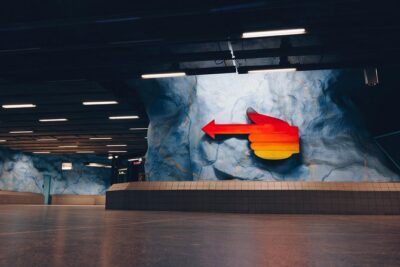
Entry Ticket To Gothenburg Museum of art with pickup
Read our review →Browse the lists this tour appears in