

Reviewed · TOURS IN STOCKHOLM
Stockholm Must Sees
Stockholm’s great museum prize is a ship that sank on its maiden voyage. This tour pairs that astonishing Vasa Museum with a walk through Gamla Stan, giving you two of the city’s essential sights in about three hours. I like the efficient route and the short public ferry ride, which turns transport into sightseeing.
I also like the local storytelling. Guides including Kevin, Katrine, Ebba, Joel, and Marita have been praised for clear explanations, Swedish insight, and an easy pace. The tradeoff is simple: this is a highlights tour, not a slow Old Town wander. One hour goes to the Vasa Museum, and the many Gamla Stan stops can feel quick.
Key points to know before booking
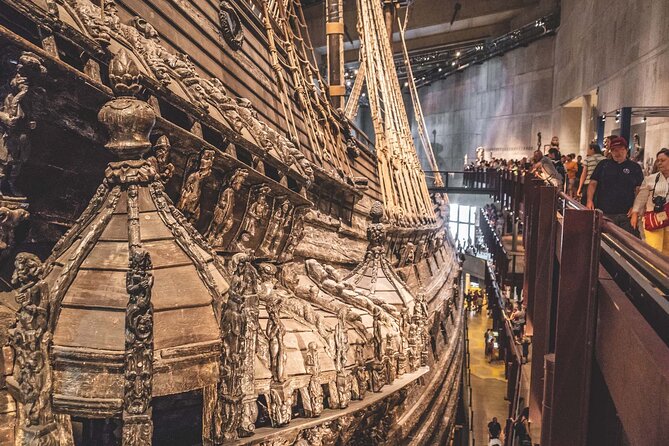
- A ship unlike anything else: The Vasa Museum displays a 17th-century warship that is about 98 percent intact.
- Two major sights in one morning: You walk Gamla Stan, then take public transport to Djurgården.
- A useful first-day tour: The route helps you locate the Royal Palace, cathedral, ferry connections, and nearby museums.
- Expect uneven streets: Much of the walk follows cobblestones, with a moderate level of physical activity.
- The guide makes the difference: Strong guides such as Kevin and Katrine add history, humor, and practical suggestions.
- The tour ends at the museum: You can keep exploring inside, then return on your own by foot or public transport.
Why this makes a smart first look at Stockholm

This tour works because it joins two very different sides of Stockholm. Gamla Stan gives you medieval streets, royal buildings, legends, and narrow lanes. The Vasa Museum gives you one powerful object and the story behind it.
That contrast keeps the morning moving. You are not spending three hours on one long architectural walk, and you are not simply being taken from one indoor attraction to another. The ferry ride adds a small but useful taste of Stockholm’s waterways, which shape the city’s layout and daily transport.
At $113.48 per person, this is not a budget walk. The price includes a professional guide, admission to the Vasa Museum, and the public transport ticket for the ferry connection. The value depends on how much help you want with orientation and context. If you would happily walk Gamla Stan alone and read museum displays at your own pace, the cost may feel high. If you have only a short stay, the package saves planning time and gets you directly to the city’s most memorable museum.
The experience is scheduled for roughly three hours and begins at 10:00 a.m. It is often booked well ahead, around 37 days in advance on average, so I would not leave it until the last minute if the timing matters to your itinerary.
Other days travellers book around Stockholm:
- Stockholm: City Archipelago Sightseeing Cruise with Guide
★ 4.3 · 10,798 reviews - Stockholm: Skansen Open-Air Museum Admission Ticket
★ 4.5 · 3,427 reviews - Stockholm: Archipelago Boat Tour
★ 4.4 · 3,110 reviews
Stortorget sets the scene in 15 minutes
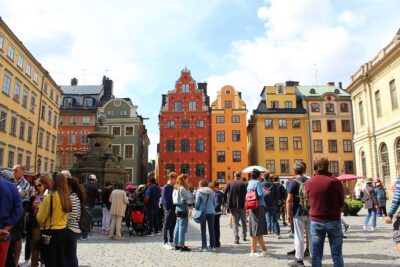
Meet at Stortorget, the oldest square in Stockholm’s Old Town. This is a practical starting point because the square sits at the heart of Gamla Stan and gives your guide a compact place to explain the city’s early development.
Stortorget is also one of the most photographed corners of Stockholm, with colorful historic buildings around the cobbles. The Nobel Museum is here too, connecting this old square with Sweden’s modern scientific and cultural legacy.
Your guide uses the square as more than a photo stop. The point is to help you understand why Gamla Stan feels so distinct from the newer parts of the city. After this introduction, the walk moves into streets that were laid out for people, horses, and carts rather than modern traffic.
Prästgatan and the city’s medieval street plan
The stop on Prästgatan lasts about 10 minutes. Its old name, Helvetsgränd, translates roughly as Hell’s Alley, a reference to medieval beliefs about a desecrated resting place near the church.
This is the kind of detail that can easily disappear if you walk through Gamla Stan alone. The lane is not a major monument, but it shows how much of Stockholm’s past survives in street names and small corners.
You will also begin to notice the practical challenge of this tour here. The Old Town is compact, but its lanes are uneven and often narrow. Wear shoes with solid grip, and do not expect a fully smooth route.
The Royal Palace gives the walk scale

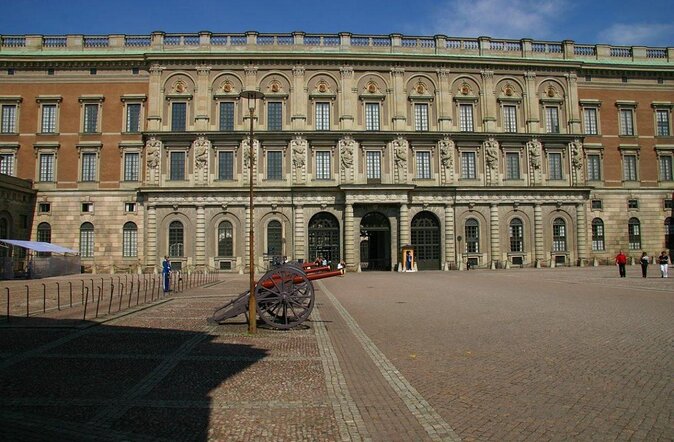
The Royal Palace receives about 10 minutes. Sweden’s royal family uses it as the King’s official residence and workplace, so this is not simply a ceremonial building viewed from far away.
The tour does not include a full palace visit. Instead, you see the exterior and hear about its role in Swedish public life. That makes this stop useful for orientation, but anyone hoping to tour royal rooms should plan a separate visit.
The palace helps put Gamla Stan into perspective. After winding through small lanes, you suddenly encounter one of the largest royal residences in Europe. I like that change in scale, even though 10 minutes is enough only for an overview.
Same city, a completely different afternoon:
- Stockholm: Highlights Boat Tour
★ 4.3 · 2,542 reviews - Stockholm Pass: Save up to 50% – Includes Vasa Museum Ticket
★ 4.1 · 2,392 reviews - Stockholm: Ghost Walk and Historical Tour
★ 4.7 · 2,206 reviews - Walking Tour of Stockholm Old Town
★ 5.0 · 1,175 reviews
Storkyrkan and the royal wedding connection

Storkyrkan, or Stockholm Cathedral, is one of the Old Town’s oldest buildings. It is also known as the Coronation Church, and it hosted the wedding of King Carl XVI Gustaf and Queen Silvia. Crown Princess Victoria and Prince Daniel married here in 2010.
The church is especially important for the famous St. George and the Dragon sculpture. The original wooden work is inside Storkyrkan, while a bronze copy appears elsewhere on the route. Your guide explains how the image came to represent the struggle between Sweden and Denmark in the late 15th century.
The tour description includes time to admire the cathedral and the sculpture, but the main emphasis is on guided interpretation rather than a long church visit. If you want quiet time inside, check how much time remains after the guide’s explanation.
Järnpojken, the smallest stop with the biggest charm

Järnpojken is a tiny statue of a boy looking at the moon. Its official name means Iron Boy, and the sculpture has become one of the Old Town’s most endearing small sights.
This 10-minute stop gives the tour some personality. After royal buildings and church history, you get a small piece of local character that you might easily miss while following a map.
Do not expect a major monument. The appeal is its scale and the fact that it rewards careful looking. A good guide can turn a tiny statue into a memorable part of the walk.
Mårten Trotzigs gränd tests the width of your shoulders
Mårten Trotzigs gränd is Stockholm’s narrowest alley, measuring only about 90 centimeters at its tightest point. It is a quick, memorable passage and one of the places where the Old Town’s medieval street plan feels most physical.
You may see claims that this is Europe’s narrowest alley. The tour correctly treats that claim with caution. A lane in Prague is narrower, at about 60 centimeters, and other European cities may have tighter passages too.
That small correction says something useful about the experience. The guide is not simply repeating every popular story. You get local legends, but also a little fact-checking.
The ferry ride turns a transfer into part of the tour

From Skeppsbron 26, you board a public ferry for the ride to Djurgården. The crossing takes about 20 minutes and is included in the tour price.
This is one of the best design choices in the route. You get a break from walking, see Stockholm from the water, and use the same kind of public transport that locals rely on. The ferry also makes the city’s island geography easier to understand.
Have your camera ready, but keep the expectations sensible. This is public transport, not a private sightseeing cruise. The experience depends on the regular ferry service and can feel more functional than leisurely. Even so, the short ride adds views and variety without requiring a separate excursion.
The Vasa Museum is the morning’s main event
The Vasa Museum receives about one hour, with admission included. You enter with the group and receive a guided explanation of the ship before continuing on your own.
The Vasa was Sweden’s most expensive and heavily decorated naval vessel in the 1600s. On its maiden voyage in 1628, it capsized and sank in Stockholm harbor while people watched from the shore. The ship was later recovered and preserved, and today about 98 percent of the original vessel remains.
The scale and condition of the ship make this more than a standard maritime museum. You can see the carved decoration, the huge wooden structure, and the physical evidence of a disaster that happened almost four centuries ago.
The guide’s role matters here. The museum is large, and the ship can be difficult to understand without a clear account of why it sank and how it was preserved. An hour gives you a strong introduction, but not enough time for every display, model, and exhibit.
That limitation is also part of the planning. The tour ends at the Vasa Museum, so you are free to remain inside after the guided portion. If the Vasa is a priority, set aside extra time after the tour rather than assuming the three-hour schedule will cover everything.
What the guide can add
The strongest part of the experience depends on the person leading it. Kevin has been praised for combining Swedish history and culture with a relaxed, engaging manner. Katrine has been noted for clear speaking, a manageable pace, and thoughtful attention to a guest using a cane.
Ebba, Joel, and Marita have also led tours praised for warmth, local pride, humor, and useful explanations. One particularly practical benefit is the chance to hear about other museums near Djurgården, including the ABBA Museum and the Armory.
That kind of advice is valuable on a first day in Stockholm. You can use the tour to decide where to return for a longer visit, where to eat, and which nearby museum fits your interests.
There is one clear warning. At least one group found the guide difficult to hear and felt the tour moved without enough effort to address the full group. That appears to be an exception among the supplied feedback, but it is a real concern on any walking tour. Stay close enough to hear, and speak up early if the group spreads out.
Pace, group size, and physical effort
The advertised maximum is 16 people, which is small enough for questions and a personal feel. One review refers to a group of 17, so actual group size may vary slightly, but you should expect a shared tour rather than private guiding.
The schedule is active. You walk through several parts of Gamla Stan, use cobblestone streets, board a ferry, and tour the museum. A moderate level of fitness is recommended.
The pace has received both kinds of feedback. Many people found it comfortable and easy to manage, while one person found the Old Town portion too much of a fast pass by. Both impressions make sense. There are roughly eight listed stops before or around the ferry, and most receive only 10 to 15 minutes.
I would choose this tour if you want a framework. I would not choose it if your ideal morning means sitting quietly in Storkyrkan, lingering over palace architecture, or photographing every lane without watching the clock.
Dress for the weather. The tour operates in all conditions, and much of the experience takes place outdoors. Comfortable shoes and a waterproof layer are sensible choices.
Who will get the most from this tour
This is a strong match for first-time visitors who want help finding their way around Stockholm. It is also useful after arriving in the city, since the route introduces major sights and can help you decide what deserves a second visit.
You will likely appreciate it if:
- You want Gamla Stan explained rather than simply photographed.
- You have limited time and want the Vasa Museum built into the morning.
- You enjoy stories about Swedish royalty, medieval streets, and local symbols.
- You prefer public transport to a private vehicle.
- You want a guide to handle the route and museum admission.
You may prefer separate visits if you already know the Old Town well, dislike group pacing, or want several hours inside the Vasa Museum. Families and older adults can manage the tour if they are comfortable with cobblestones and walking, but the route is not designed as a low-mobility experience.
Is $113.48 a fair price?
The price is fair when you place a value on saved time and interpretation. Admission to the Vasa Museum and the ferry ticket are included, and the guide connects the sights into one morning instead of leaving you to coordinate them yourself.
The strongest value comes from the Vasa Museum. It is the tour’s major attraction, and the guided introduction helps you understand what you are seeing before exploring alone.
The weaker value is the Old Town portion if you want depth at every stop. You are paying for a broad introduction, not a detailed architectural study. I would compare the cost with the price of a separate museum ticket and the amount you would spend on a self-guided walk. If you are comfortable planning independently, you can spend less. If you want a smooth first orientation, the package earns its price more easily.
Should you book Stockholm Must Sees?
Book it if this is your first visit, you have one free morning, and you want a clear introduction to Stockholm without arranging several pieces yourself. The combination of Gamla Stan, a public ferry, and the Vasa Museum is smart, and the tour ends in a useful area for continuing your day.
Skip it if you want a leisurely Old Town walk or a full museum visit with no time limit. In that case, visit Gamla Stan on your own and reserve several hours for the Vasa Museum.
For most first-time visitors, I would book it early, wear good shoes, stay near the guide so you can hear every story, and plan to remain at the Vasa Museum after the official tour ends. Free cancellation is available up to 24 hours before the start time, which gives you some flexibility if your plans change.
FAQ
How long does Stockholm Must Sees last?
The tour lasts approximately three hours. It begins at 10:00 a.m. and ends at the Vasa Museum.
Where does the tour start?
The meeting point is Stortorget 2 in Stockholm’s Old Town.
Where does the tour end?
The tour ends at the Vasa Museum on Galärvarvsvägen 14, Djurgården. You can continue exploring the museum or visit nearby museums, then make your own way back by walking or public transport.
Is admission to the Vasa Museum included?
Yes. The Vasa Museum entrance fee is included, along with the public transport ticket used to reach the museum.
How much walking is involved?
The tour requires a moderate level of physical fitness. Much of the route follows cobblestone streets, and you should dress comfortably for walking in all weather conditions.
Can I cancel for a full refund?
Yes. You can cancel at least 24 hours before the experience start time for a full refund. Cancellations or changes made less than 24 hours before the start time are not accepted for a refund.
Just added around Stockholm
- From Stockholm: Archipelago Hike to Landsort Lighthouse★ 5.0 · 26 reviews
- Stockholm: Sigtuna and Uppsala Viking History Day Tour★ 4.7 · 41 reviews
- Private Golden Hour Photo Walk in Stockholm★ 5.0 · 3 reviews
- Best of Stockholm: Private Walking Tour with a Local★ 4.6 · 5 reviews
- Stockholm’s Best Pub Crawl★ 4.5 · 134 reviews
- City Hall, Old Town & Vasa Museum – all-in-1 guided experience★ 5.0 · 38 reviews
- Stockholm RIB Speed Boat Tour★ 5.0 · 25 reviews
- Stockholm must see: City Hall, Gamla Stan and Vasa Museum★ 5.0 · 23 reviews
Tours in Stockholm, compared.

City Archipelago Sightseeing Cruise with Guide
Read our review →


Stockholm Pass: Save up to 50% – Includes Vasa Museum Ticket
Read our review →

The Original Stockholm Ghost Walk and Historical Tour – Gamla Stan
Read our review →Browse the lists this tour appears in